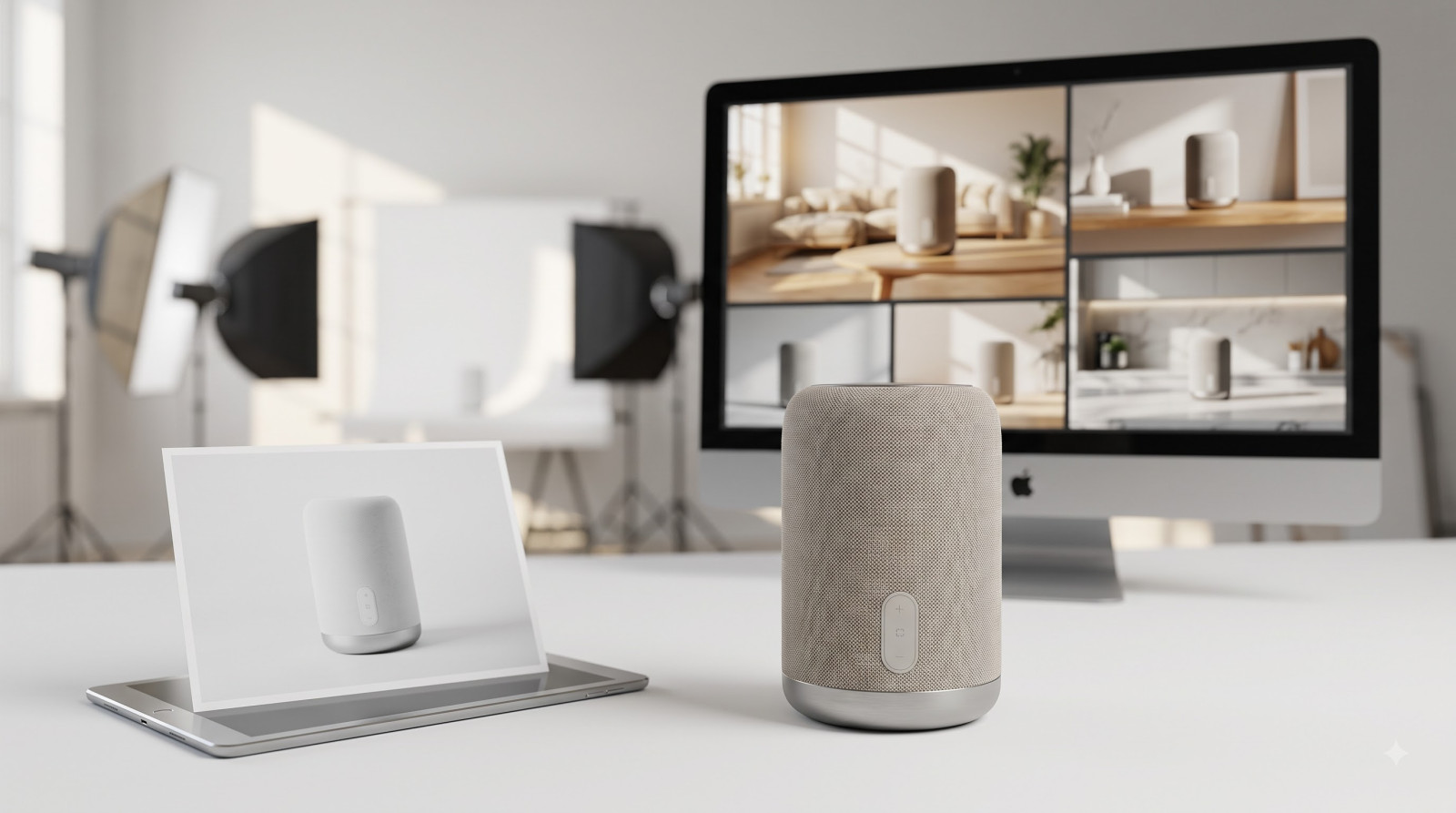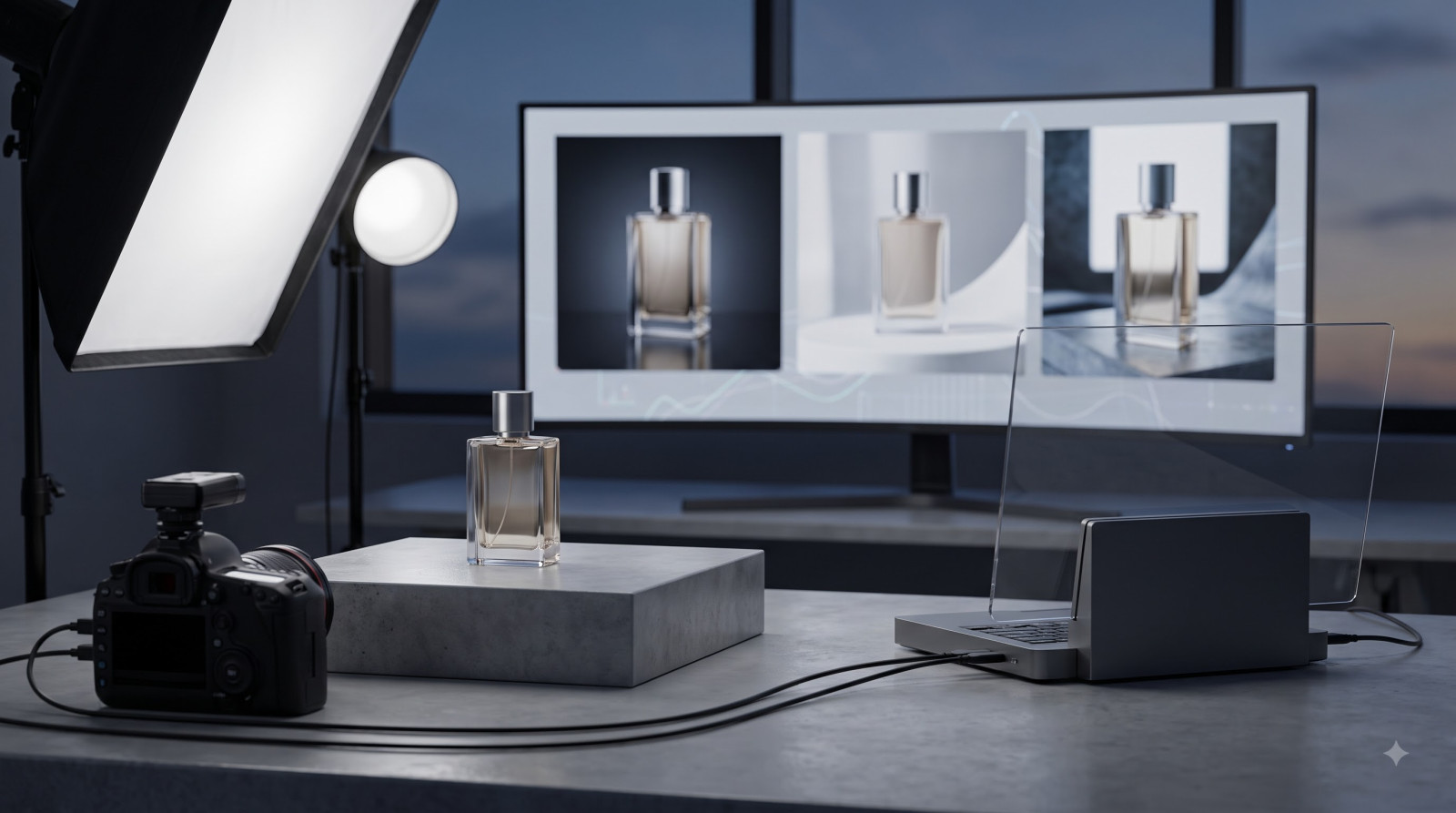
Product photography is more than taking a picture of an item against a clean background. The way a product is photographed can influence how customers understand its quality, features, purpose, and personality.
Consider a perfume bottle. A simple white-background photograph clearly shows its shape and packaging. Place the same bottle on a dark marble pedestal with dramatic lighting, and it becomes part of a luxury campaign. Photograph it beside botanical ingredients in natural sunlight, and the visual communicates an entirely different mood.
The product hasn't changed. The photography style has.
For ecommerce businesses, brands, designers, and marketers, understanding the different types of product photography makes it easier to create images for online stores, social media, advertising, and promotional campaigns.
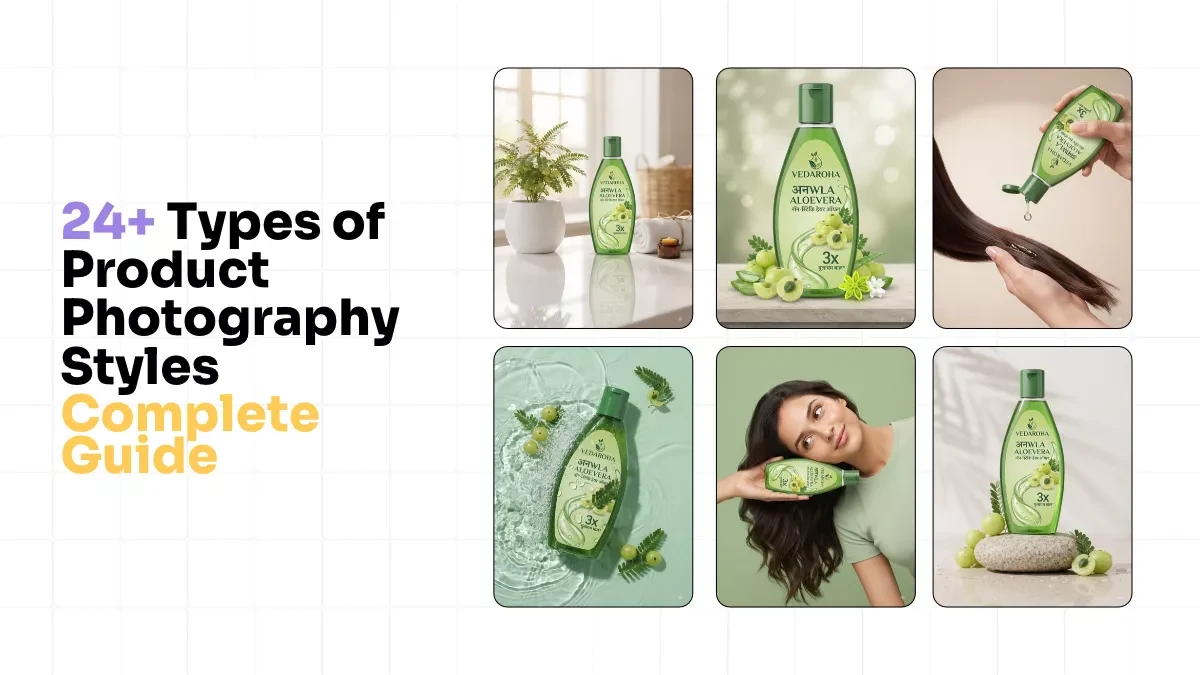
This guide explores 24 popular product photography styles and shot types, explains where each works best, and shows how AI tools can help you explore creative product photography concepts.
What Is Product Photography?
Product photography is a branch of commercial photography focused on presenting products clearly, accurately, and attractively.
It helps potential customers understand what a product looks like, how it works, and how it might fit into their lives.
A single product may require several types of photographs because each image serves a different purpose. For example, an ecommerce listing may need a clean packshot, a close-up of the product's texture, a lifestyle image, and a photograph showing the product in use.
Photography Styles vs. Shot Types
Although the terms are often used together, there is a useful distinction:
- Photography style: The visual aesthetic, such as minimalist, luxury, editorial, or rustic.
- Shot type: The way the product is presented, such as a close-up, flat lay, group shot, or 360-degree view.
- Photography technique: The method used to create the image, such as macro photography, splash photography, or high-speed capture.
One photograph can combine all three. A luxury perfume image, for instance, might use an editorial style, a close-up composition, and dramatic backlighting.
24 Types of Product Photography Styles and Shot Types
1. White Background Product Photography
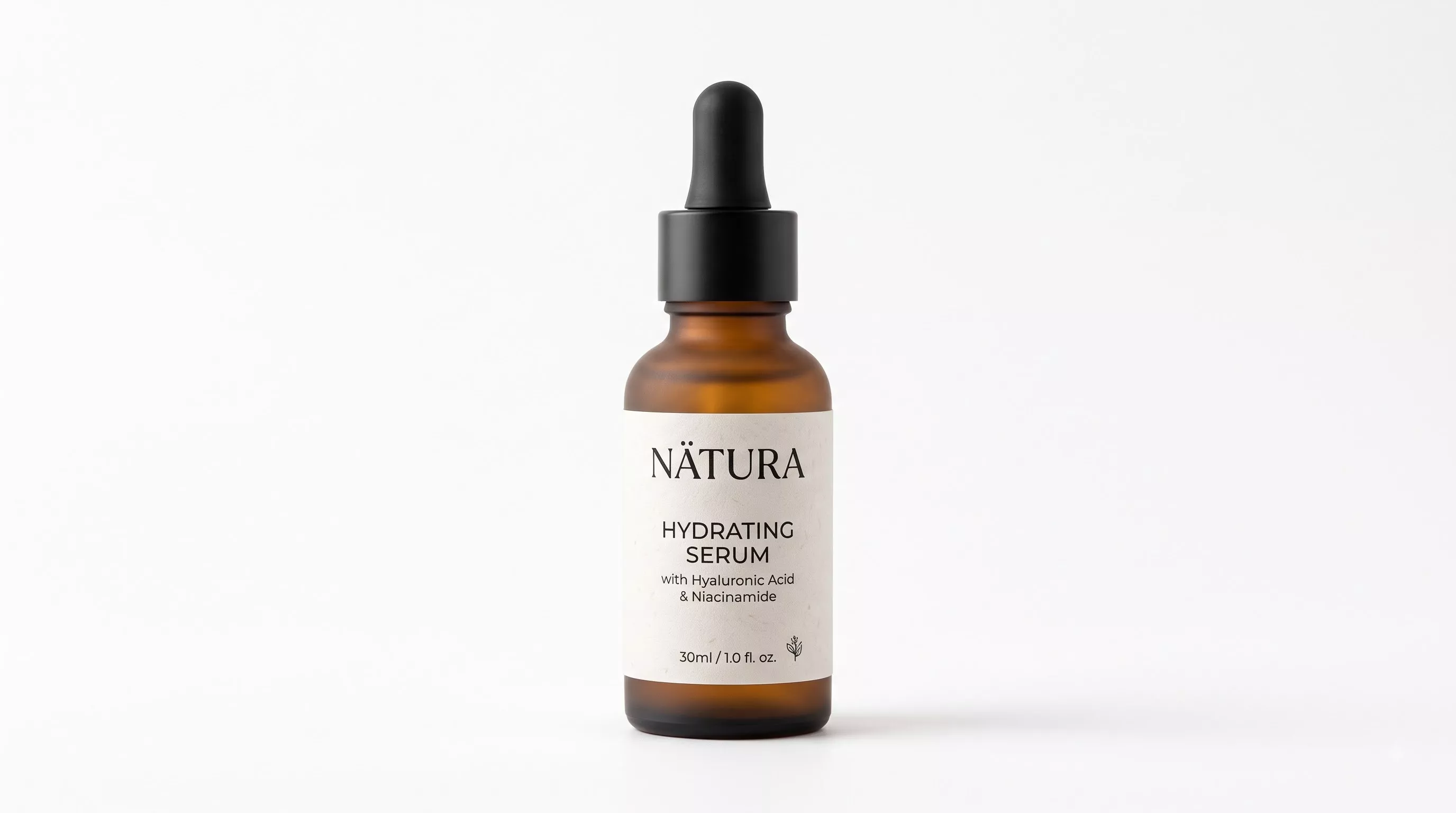
White-background photography presents a product against a clean white surface, keeping attention on its appearance rather than its surroundings.
It is one of the most practical approaches for online retail because customers can easily inspect product shape, packaging, color, and visible features.
Best for: Ecommerce catalogs, product listings, marketplaces, and product comparison pages.
Example: A skincare bottle photographed upright against a pure white background with even illumination and a subtle contact shadow.
Photography tip: Use diffused lighting to control harsh reflections and keep the product's edges clearly defined. Check each marketplace's image requirements before uploading.
2. Minimalist Product Photography
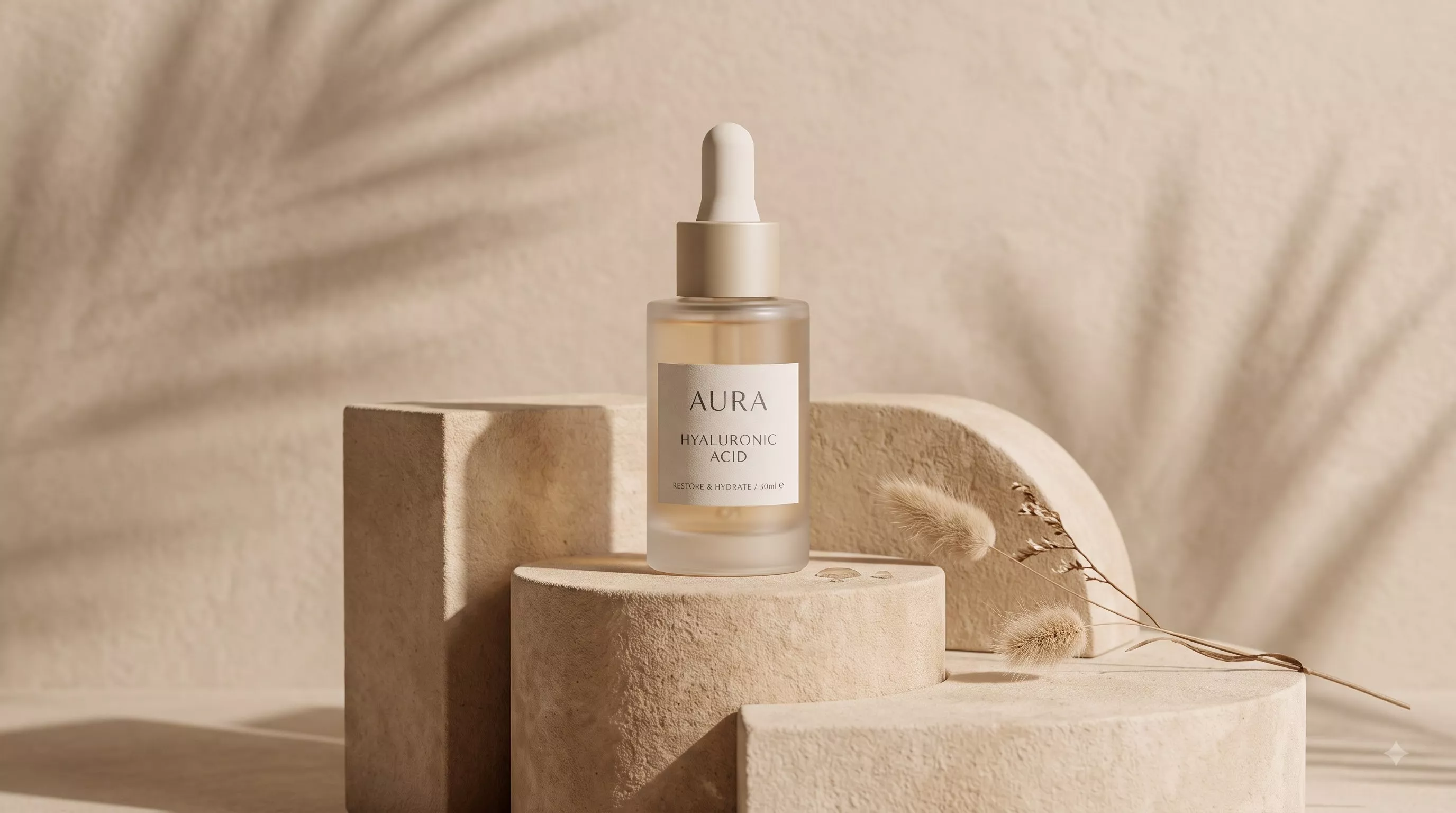
Minimalist photography uses simple backgrounds, restrained colors, limited props, and carefully balanced compositions.
Unlike basic white-background photography, minimalist images can incorporate geometric platforms, subtle textures, and creative negative space.
Best for: Premium skincare, electronics, contemporary accessories, home decor, and modern brands.
Example: A face serum bottle positioned on a beige geometric pedestal against a matching studio background.
Photography tip: Remove unnecessary objects and use lighting, composition, and material contrast to create visual interest.
3. Lifestyle Product Photography
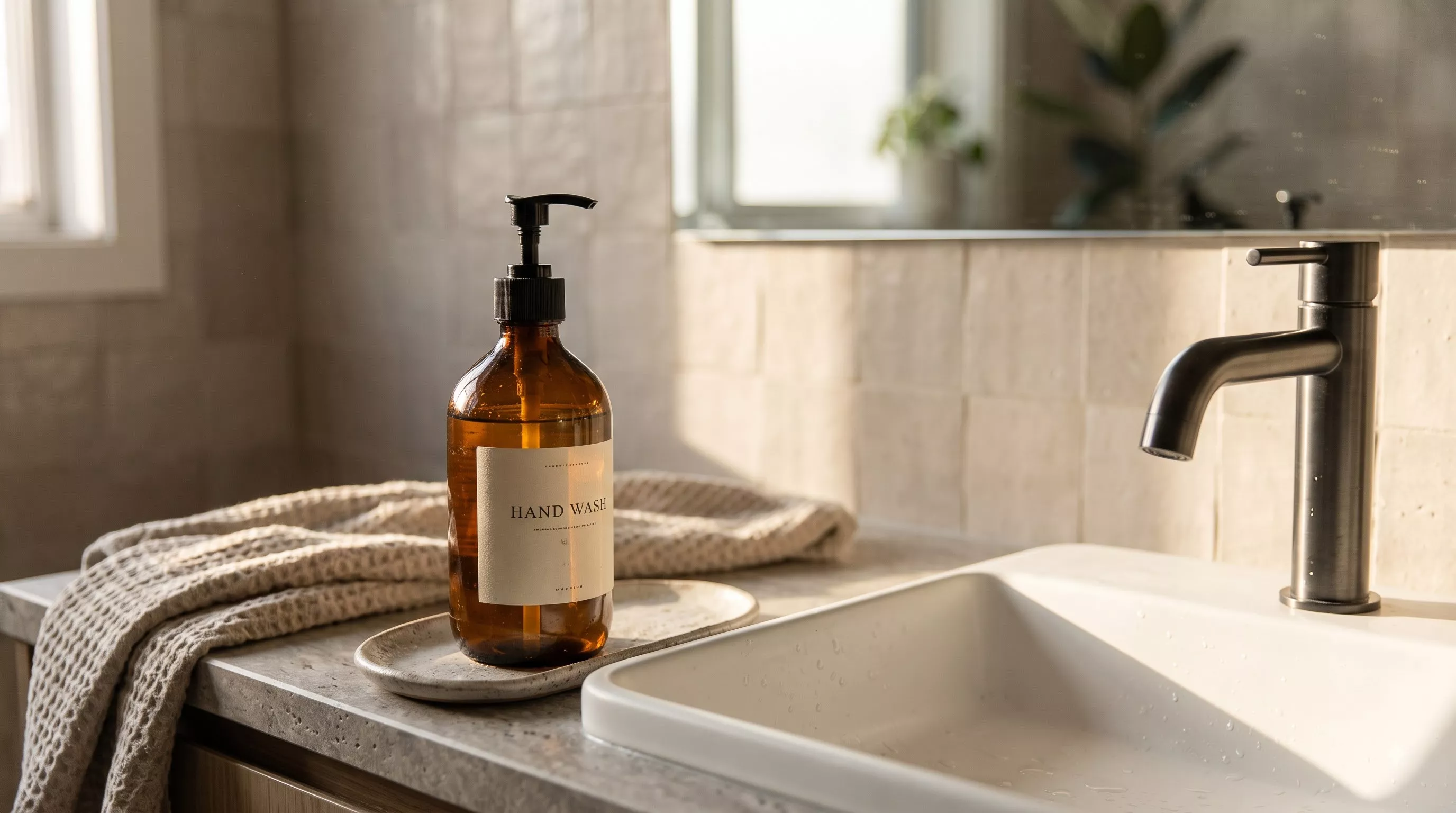
Lifestyle product photography shows an item in a realistic environment where customers might use it.
Instead of displaying a coffee mug alone, a lifestyle photograph might place it on a breakfast table beside a newspaper and freshly prepared food.
The environment gives customers context and helps them imagine the product as part of their everyday routine.
Best for: Furniture, skincare, fashion, kitchenware, electronics, and home accessories.
Example: A handwash bottle beside a modern bathroom sink, photographed with natural morning light.
Photography tip: Choose props and environments that support the product's actual use rather than simply making the scene decorative.
4. Studio Product Photography
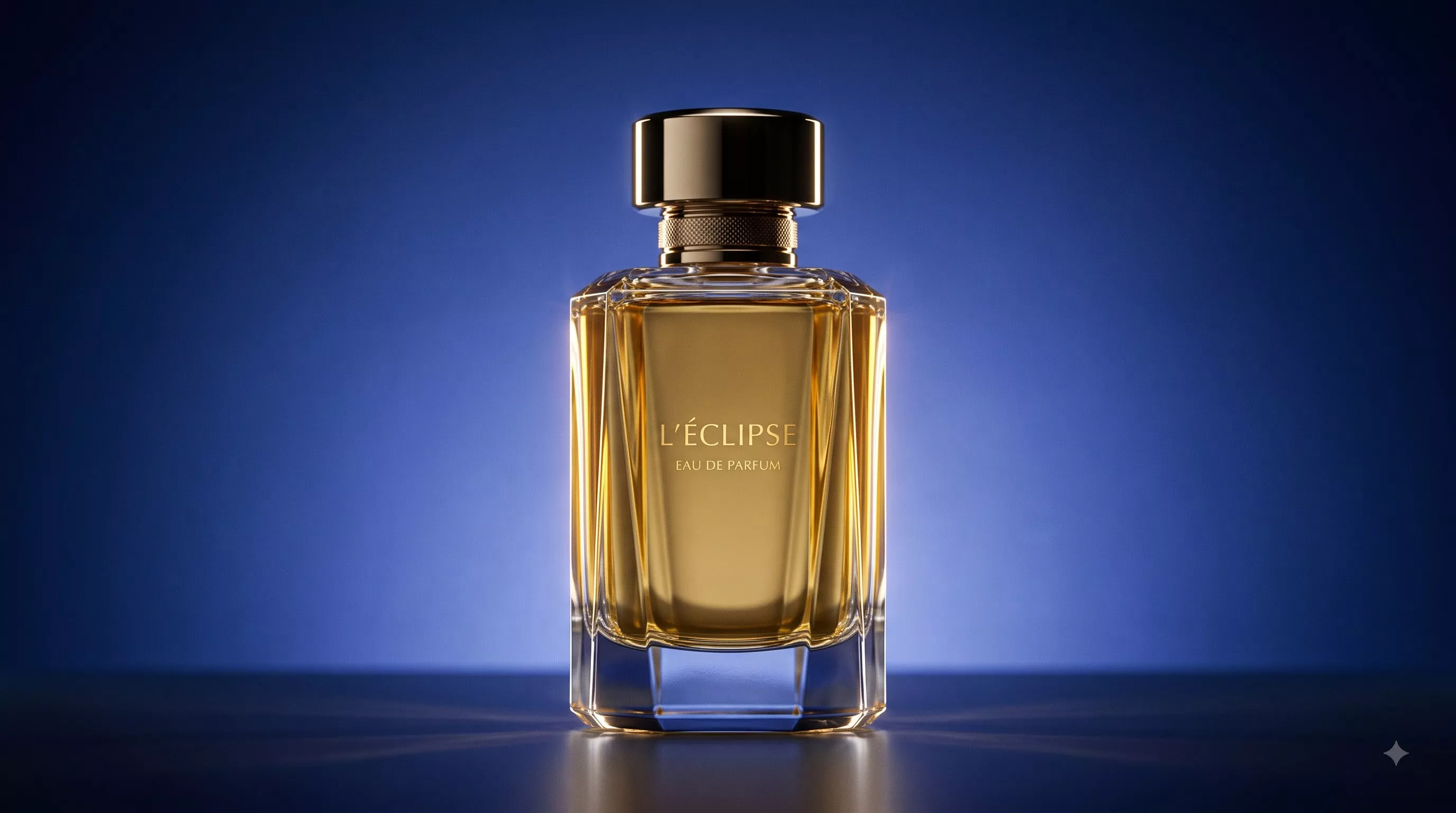
Studio photography takes place in a controlled environment where lighting, background, camera position, and product placement can be adjusted precisely.
A studio setup may be simple and functional or highly creative, using colored backdrops, reflective surfaces, platforms, and sculptural lighting.
Best for: Cosmetics, watches, fragrances, packaged goods, electronics, and catalog photography.
Example: A perfume bottle photographed against a blue gradient backdrop with controlled highlights along its glass edges.
Photography tip: Use separate lighting adjustments for the product and background when you need more precise control over reflections and contrast.
5. Flat Lay Product Photography
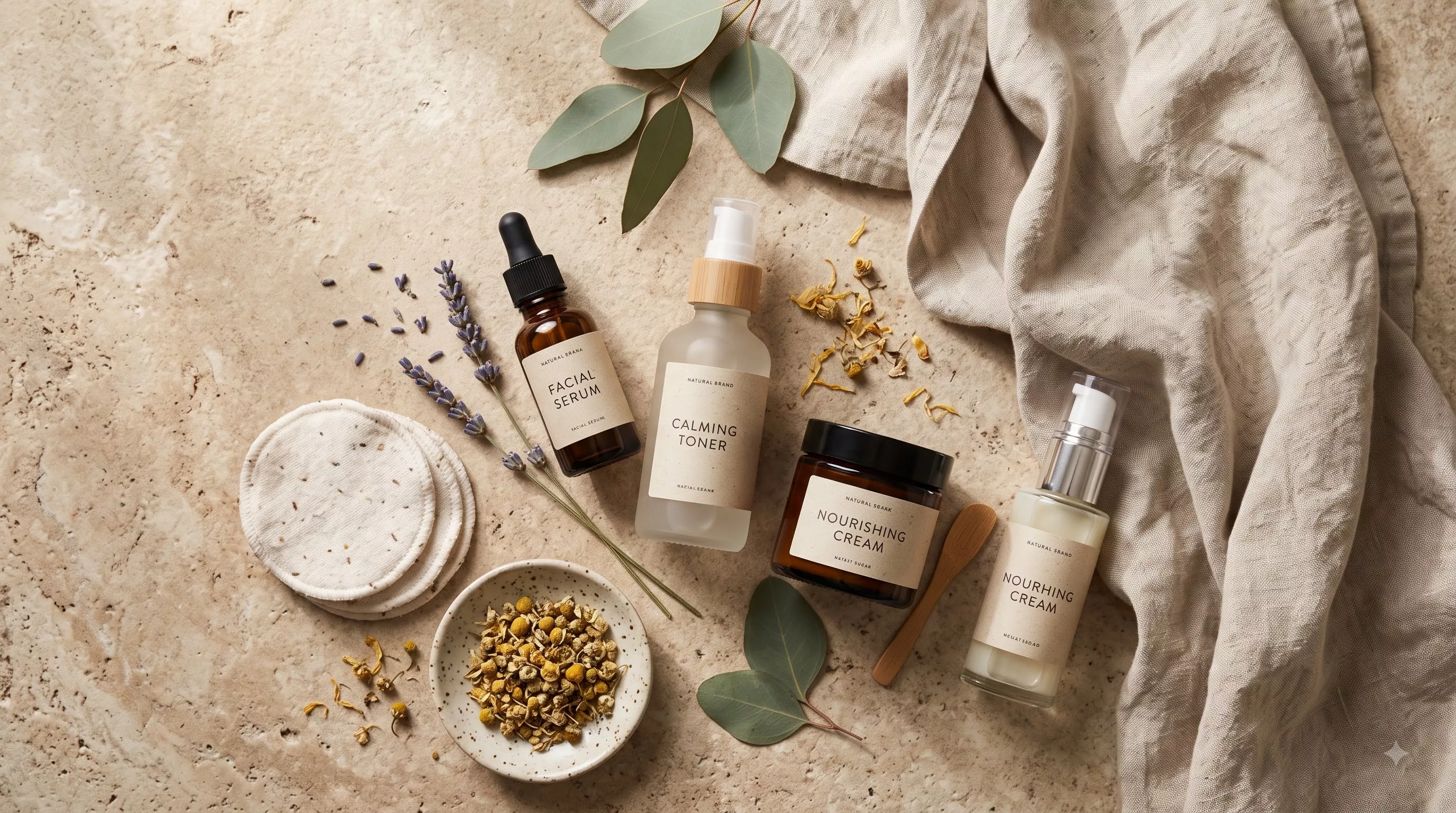
Flat lay photography captures products from directly above, usually at a 90-degree angle to the surface.
The overhead perspective makes it useful for arranging several objects into a cohesive composition.
Flat lays can be symmetrical and organized or intentionally casual, depending on the brand's personality.
Best for: Cosmetics, jewellery, stationery, fashion accessories, food, and gift collections.
Example: A collection of skincare products arranged with cotton pads, botanical ingredients, and folded linen on a textured surface.
Photography tip: Start with the main product, then position supporting props around it. Leave enough space so the composition does not feel overcrowded.
6. Luxury Product Photography
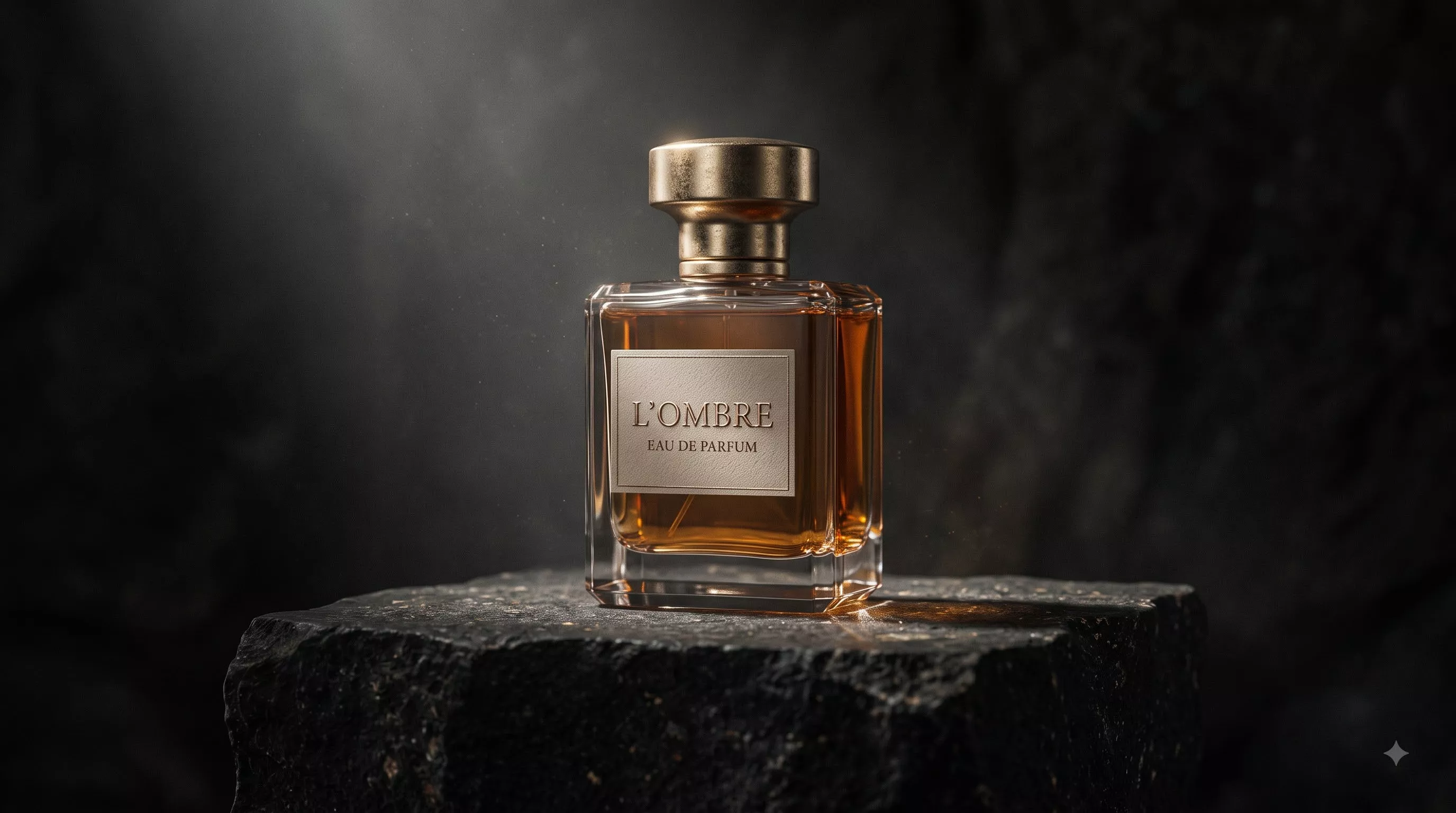
Luxury product photography emphasizes refined materials, sophisticated styling, and controlled lighting to create a premium visual identity.
Common visual elements include marble, silk, polished stone, metallic surfaces, architectural platforms, and carefully shaped shadows.
However, luxury does not always mean dark backgrounds and gold accents. Bright minimalist imagery can communicate luxury just as effectively when the styling and composition are intentional.
Best for: Fine jewellery, luxury watches, premium fragrance, designer handbags, and high-end skincare.
Example: A glass perfume bottle placed on a dark stone pedestal with a soft spotlight illuminating its label and metallic cap.
Photography tip: Focus on material quality and precision. Poorly controlled reflections or distracting props can weaken an otherwise premium composition.
7. Editorial Product Photography
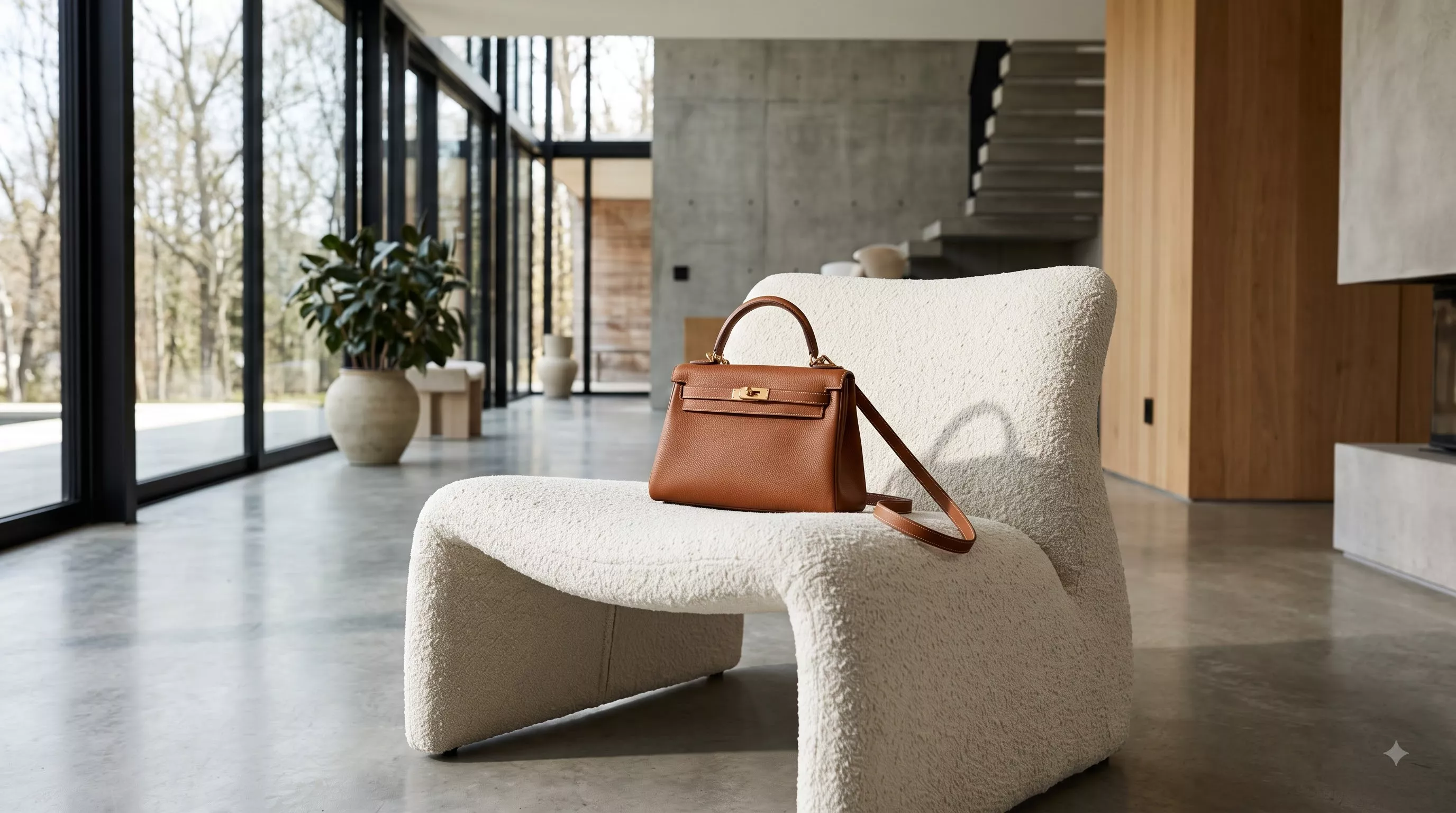
Editorial product photography uses visual storytelling, fashion-inspired composition, and artistic direction to communicate a brand's personality.
Rather than simply displaying an item, an editorial image creates a mood or tells a story.
It often incorporates unusual camera angles, architectural locations, dramatic lighting, or carefully styled models.
Best for: Fashion, jewellery, designer accessories, fragrances, and brand campaigns.
Example: A designer handbag photographed on a sculptural chair inside a modern architectural setting.
Photography tip: Establish a clear creative concept before selecting props, models, or locations.
8. Macro Product Photography
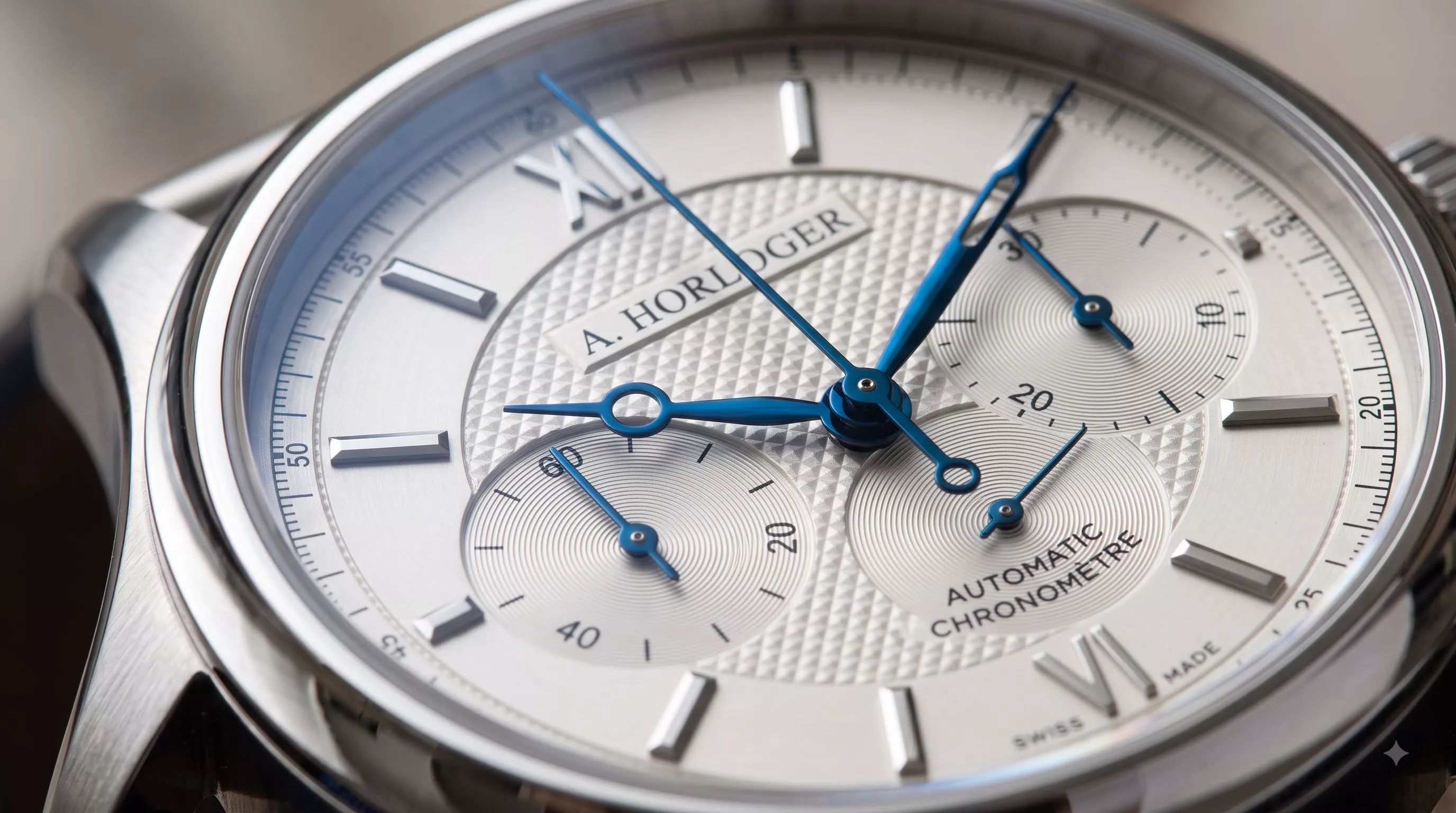
Macro photography captures small details at high magnification, revealing textures and features that may not be obvious in a standard product photograph.
It is particularly useful for products where craftsmanship, materials, or surface quality influence purchasing decisions.
Best for: Jewellery, watches, cosmetics, electronics, textiles, and handcrafted products.
Example: A close-up photograph revealing the intricate dial, hands, and surface finishing of a wristwatch.
Photography tip: Pay close attention to focus and lighting. At high magnification, even small camera movements can affect sharpness.
9. Creative Conceptual Product Photography
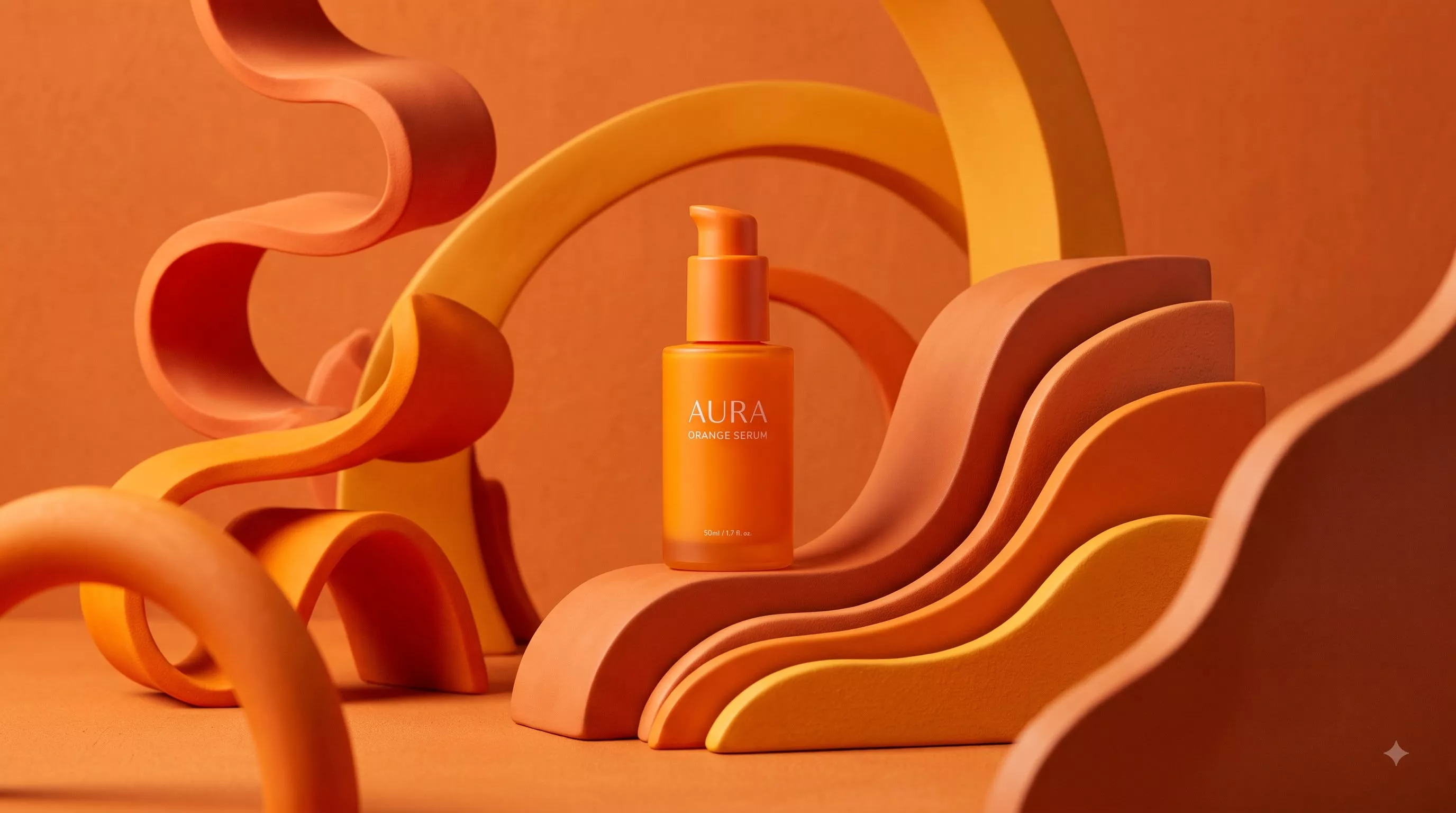
Conceptual product photography uses visual metaphors, imaginative environments, and unusual compositions to communicate an idea.
A product might appear suspended in mid-air, surrounded by abstract shapes, or placed in a surreal environment.
These images are especially useful when the goal is to attract attention or express a particular brand message.
Best for: Advertising campaigns, product launches, social media creatives, and promotional banners.
Example: A bright orange cosmetic bottle surrounded by sculptural orange forms to emphasize its vibrant identity.
Photography tip: Make sure the creative concept strengthens the product message rather than distracting from the item being advertised.
10. Natural and Outdoor Product Photography
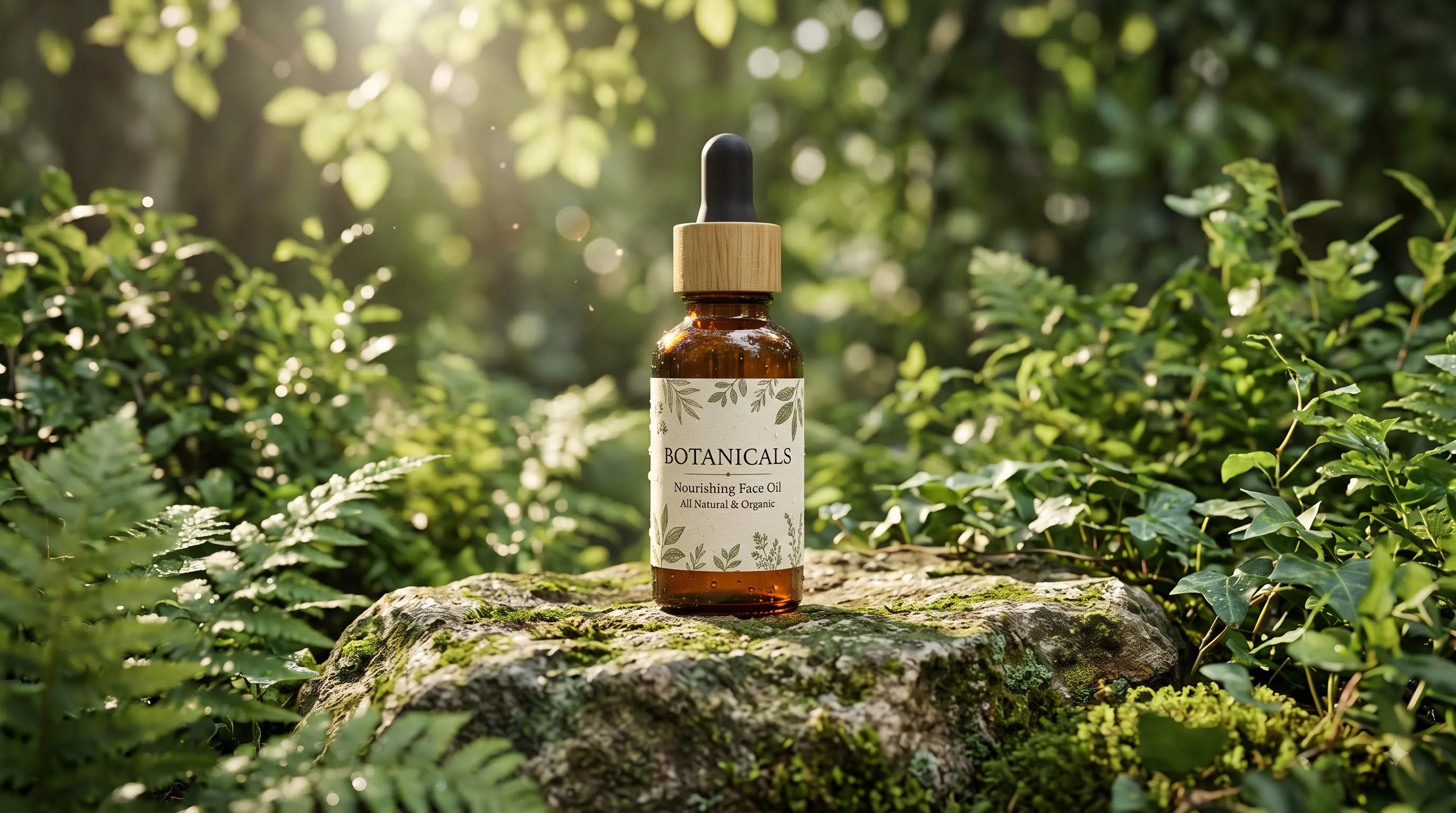
Outdoor photography places products in natural environments such as gardens, forests, beaches, mountains, or open landscapes.
Natural textures, sunlight, and environmental details can help communicate freshness, adventure, simplicity, or an outdoors-focused identity.
Best for: Outdoor equipment, footwear, skincare, beverages, and nature-inspired products.
Example: A botanical skincare bottle resting on a natural stone surrounded by greenery and soft sunlight.
Photography tip: Watch for changing sunlight, strong shadows, and color casts from surrounding vegetation.
11. Food and Beverage Product Photography
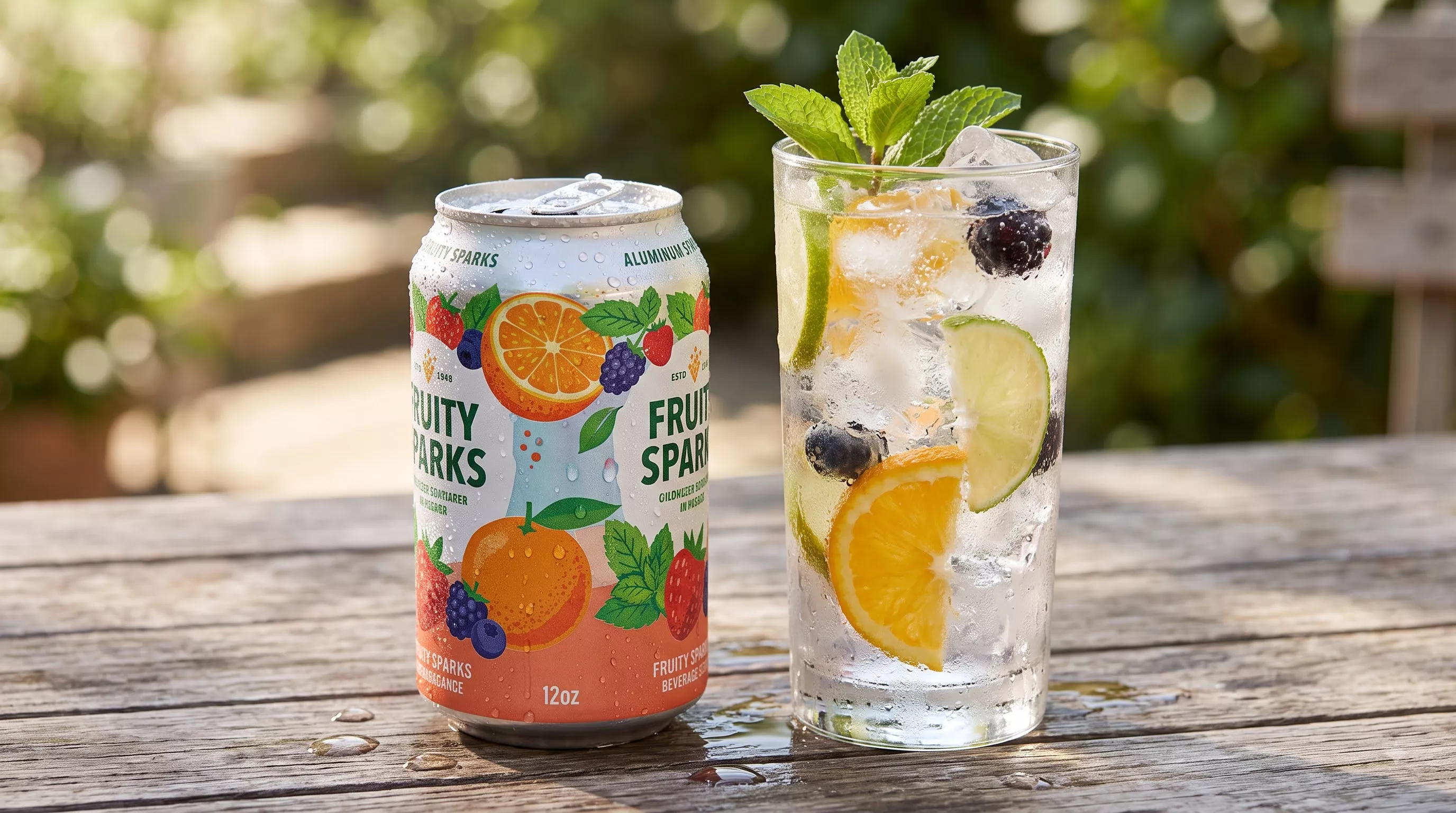
Food and beverage photography emphasizes freshness, texture, appetite appeal, and presentation.
Lighting and styling are particularly important because small details, such as condensation, steam, bubbles, or ingredient texture, can influence how appealing the product looks.
Best for: Packaged foods, restaurants, beverages, snacks, and grocery brands.
Example: A chilled beverage can standing beside a glass filled with ice and fresh fruit, with realistic condensation on the surfaces.
Photography tip: Keep ingredients and product presentation accurate. Avoid adding ingredients or visual claims that misrepresent what the product contains.
12. Fashion Product Photography
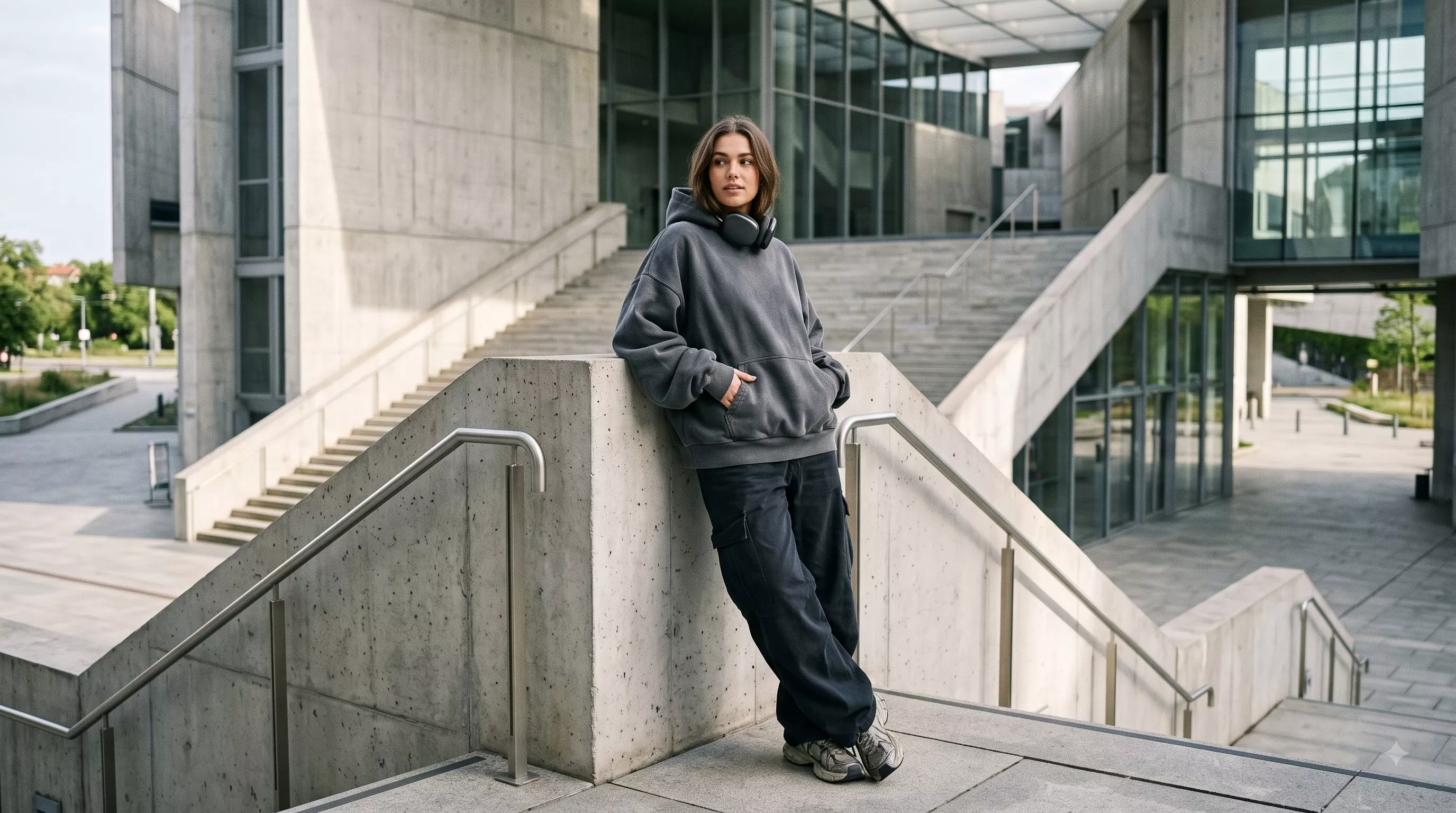
Fashion product photography presents clothing, footwear, and accessories in ways that communicate fit, material, styling, and brand identity.
It can range from simple catalog photography to elaborate fashion campaigns.
Best for: Apparel, footwear, handbags, eyewear, and accessories.
Example: A model wearing an oversized hoodie against a contemporary architectural background.
Photography tip: Include enough angles and detail photographs to help customers evaluate fit, fabric, and construction.
13. Model Product Photography
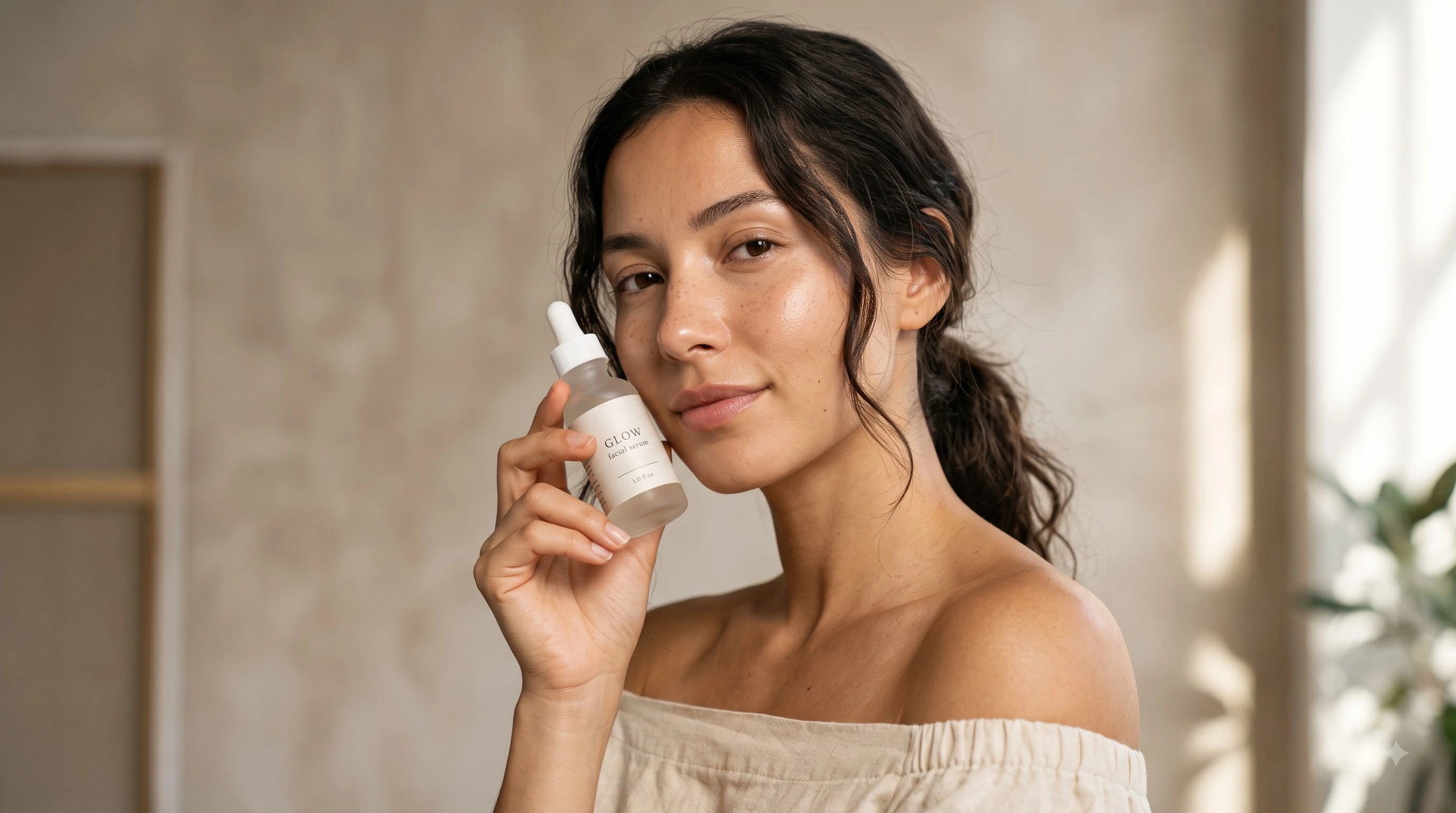
Model product photography incorporates people to show how an item is worn, held, or used.
Models can provide scale, demonstrate function, and introduce an emotional or aspirational element.
Best for: Cosmetics, jewellery, watches, fashion, eyewear, and personal care products.
Example: A beauty model holding a skincare serum bottle beside her face in a softly lit studio.
Photography tip: Keep the product clearly visible and ensure that its appearance remains accurate.
14. Product-in-Use Photography
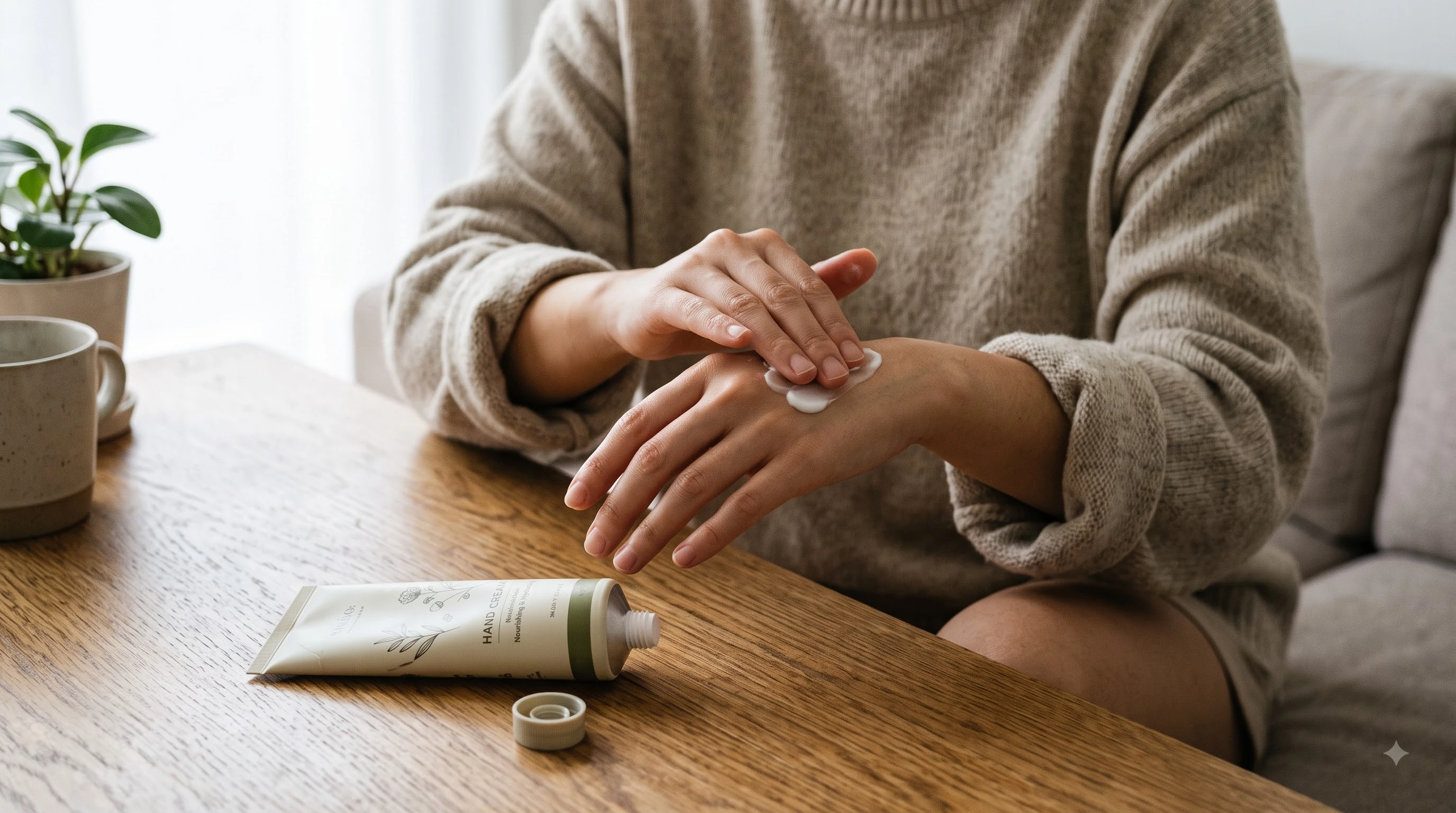
Product-in-use photography focuses on demonstrating the item's function.
It differs from general lifestyle photography because the act of using the product is central to the composition.
Best for: Beauty products, electronics, fitness equipment, kitchen appliances, and household products.
Example: A person applying hand cream while the product tube remains visible in the frame.
Photography tip: Show a realistic use case and avoid implying performance results that the product cannot substantiate.
15. Dark and Moody Product Photography
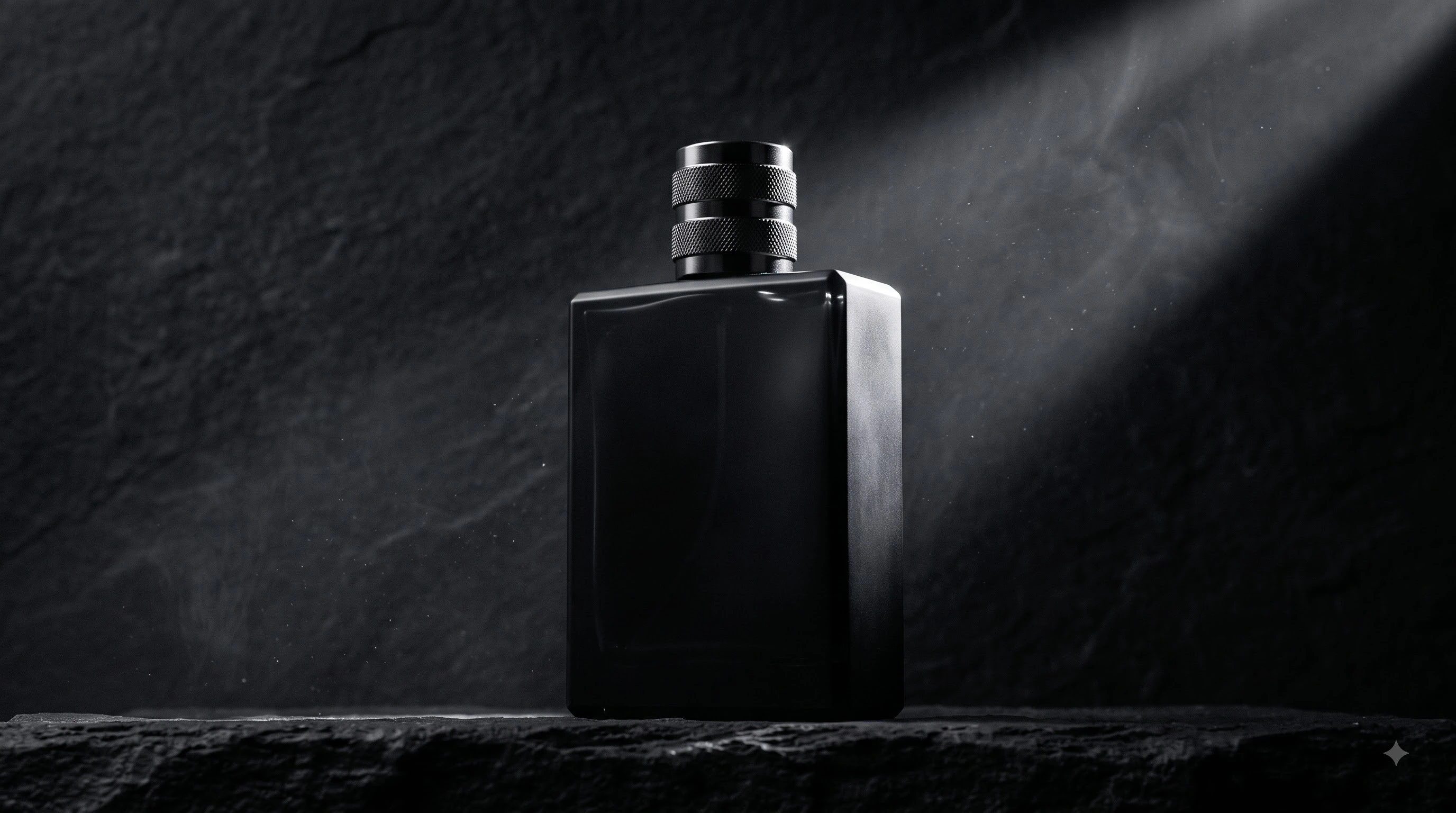
Dark and moody photography uses low-key lighting, deep shadows, and restrained highlights to create atmosphere.
It is frequently associated with dramatic, sophisticated, or cinematic brand identities.
Best for: Fragrances, watches, leather accessories, and luxury goods.
Example: A black fragrance bottle emerging from a charcoal background with a narrow beam of light defining its silhouette.
Photography tip: Preserve enough detail in dark areas so customers can still identify the product.
16. Bright and Colorful Product Photography
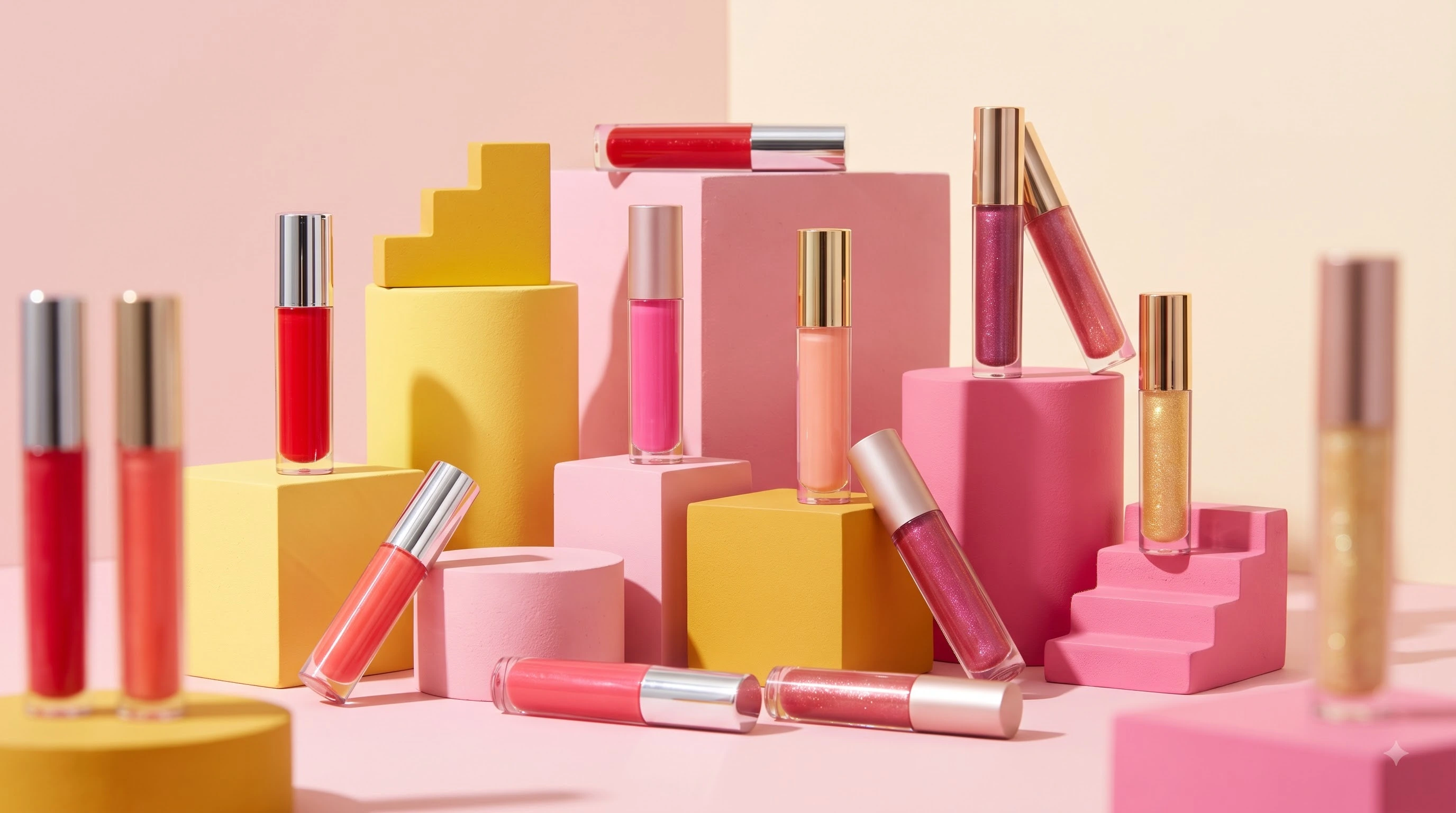
Bright product photography uses saturated backgrounds, strong color contrast, and playful arrangements.
It is especially effective for brands that want to communicate energy, fun, youthfulness, or creativity.
Best for: Candy, beverages, makeup, toys, stationery, and youth-oriented products.
Example: A colorful lip gloss collection arranged on contrasting pink and yellow geometric blocks.
Photography tip: Choose colors that complement the product packaging while keeping the product visually dominant.
17. Monochromatic Product Photography
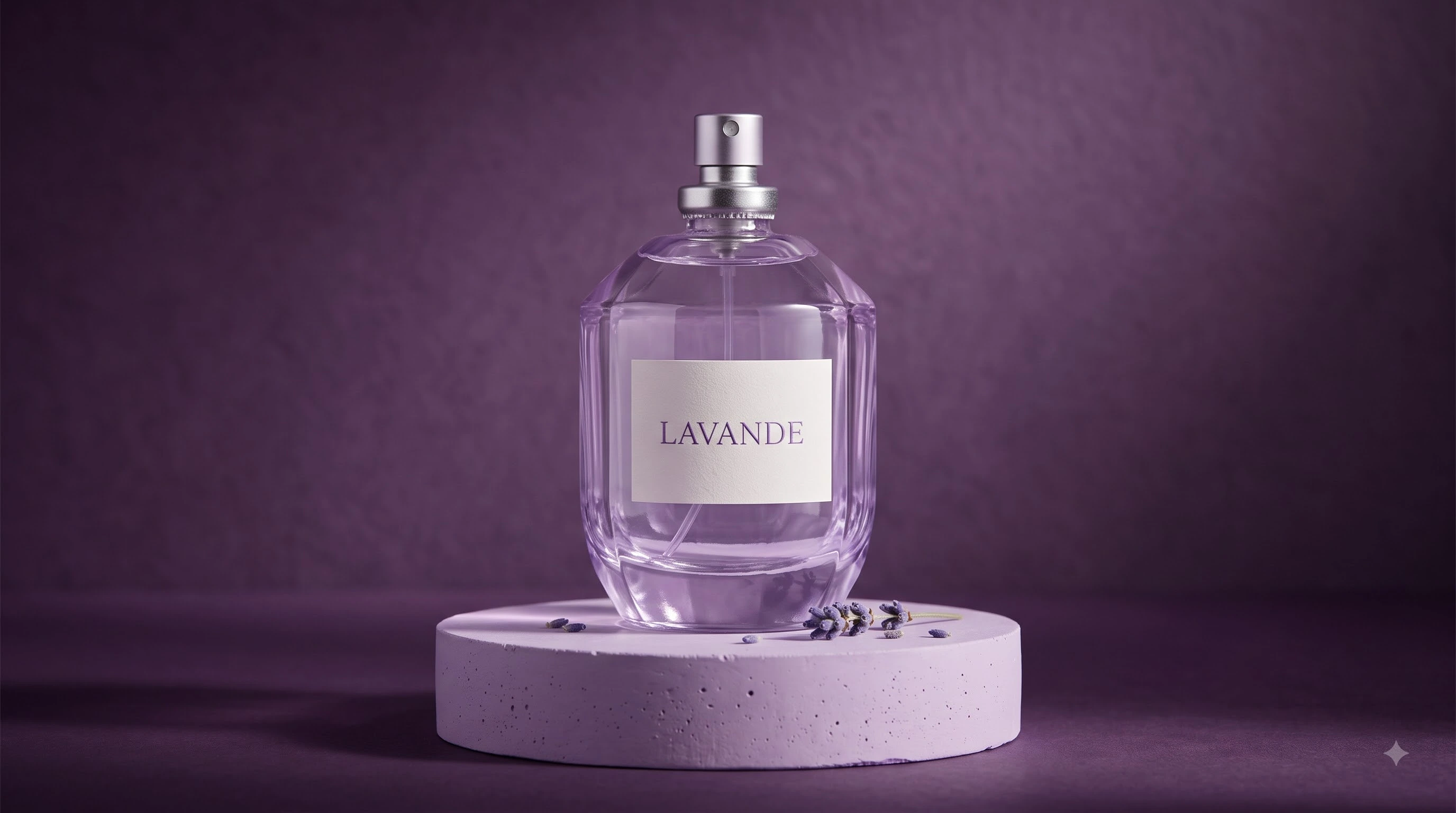
Monochromatic photography builds a composition around one dominant color family.
The product, background, surfaces, and props use related tones to create a cohesive appearance.
Best for: Beauty products, fragrance, accessories, packaging campaigns, and social media branding.
Example: A lavender-colored perfume bottle placed on a lilac platform against a deeper purple backdrop.
Photography tip: Use changes in brightness, texture, and material finish to separate the product from the background.
18. Splash and Liquid Product Photography
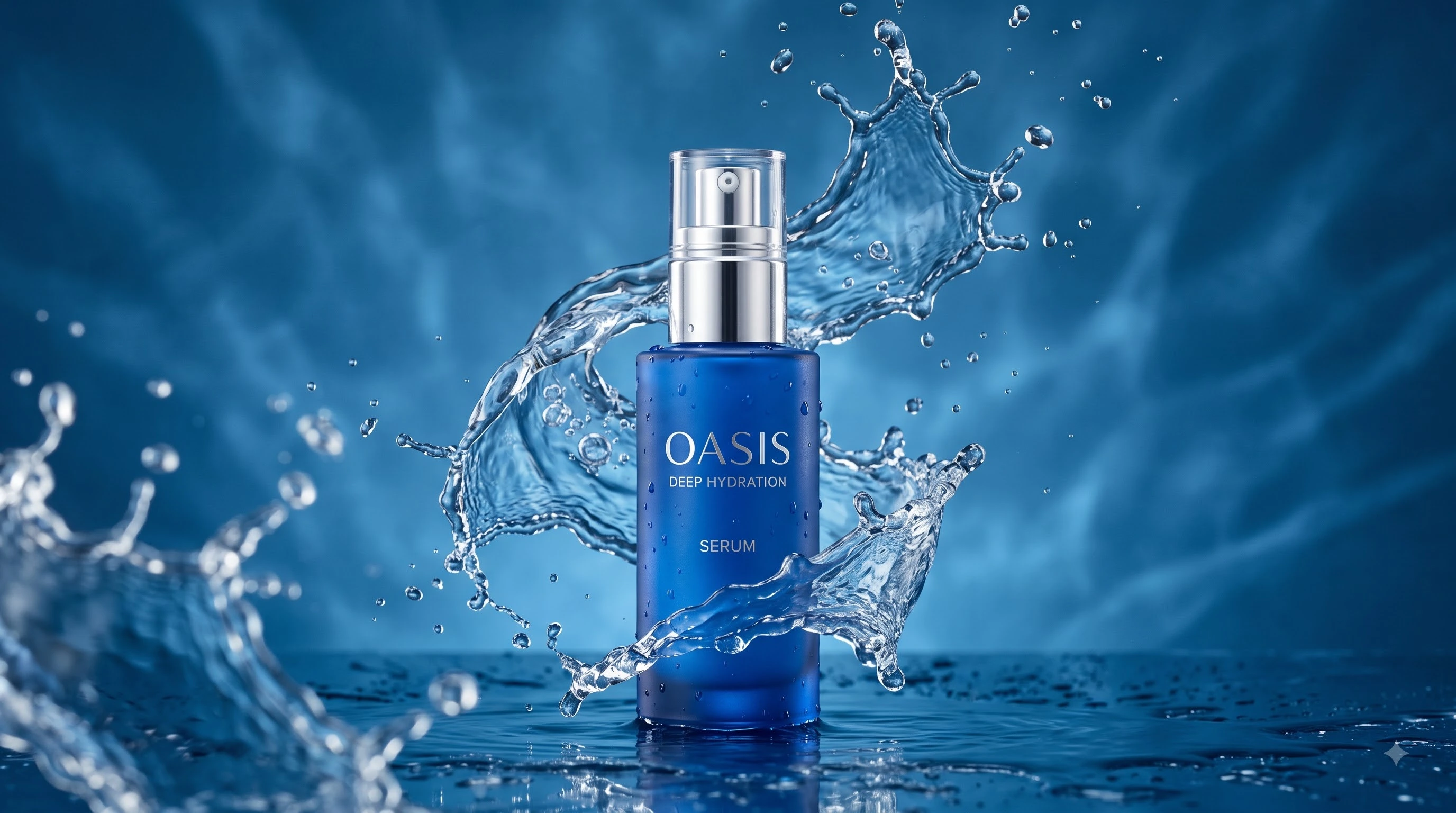
Splash photography captures products interacting with water or other liquids.
Frozen droplets, splashes, and fluid movement can communicate energy, freshness, or a water-related product concept.
Best for: Beverages, skincare, shampoos, body washes, and waterproof accessories.
Example: A blue skincare bottle surrounded by a suspended water splash against a matching studio background.
Photography tip: Traditional splash photography often requires controlled lighting and carefully timed captures. AI-generated alternatives should be reviewed for realistic liquid behavior.
19. Floating and Levitation Product Photography
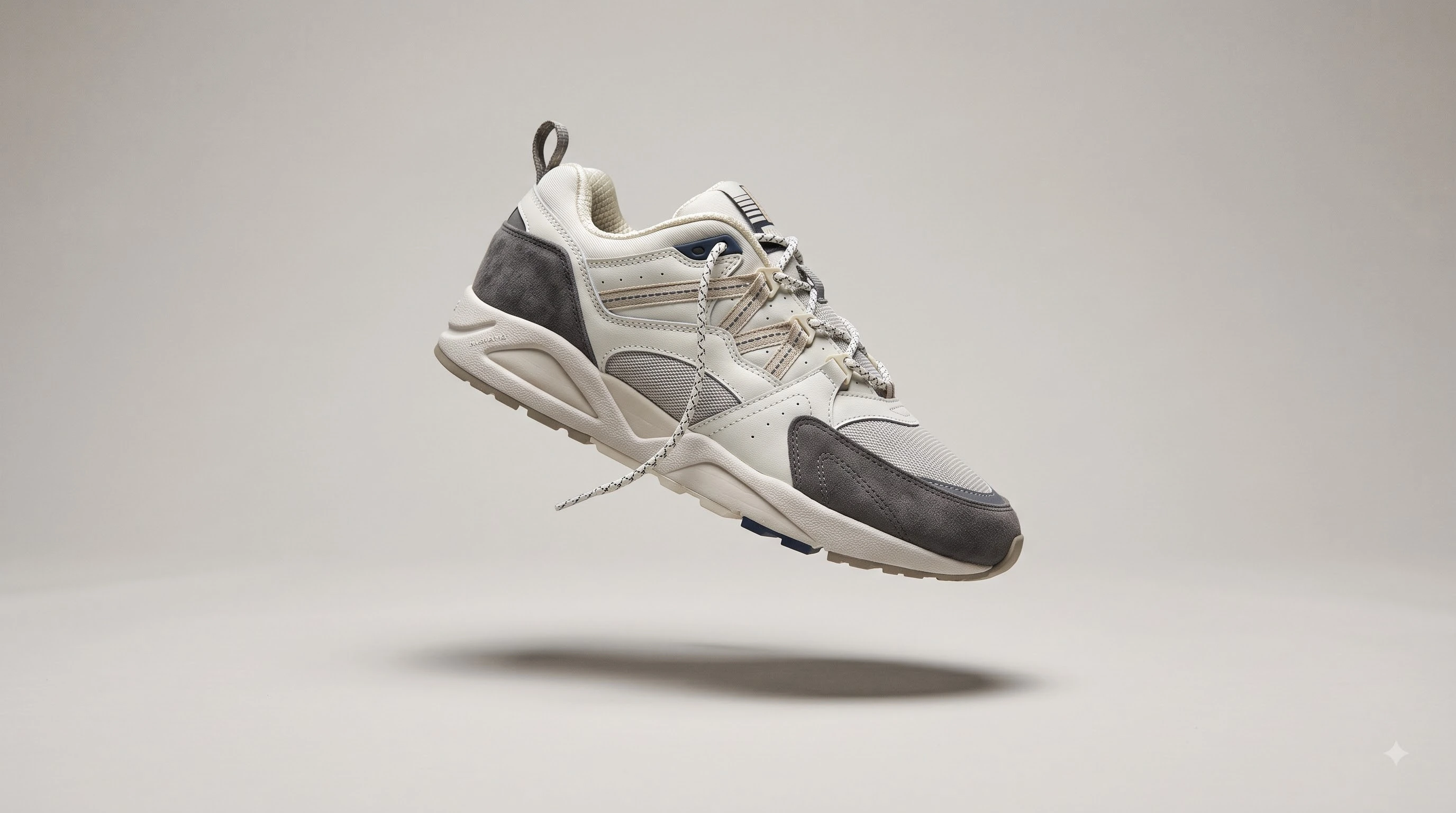
Levitation photography creates the impression that a product is floating or suspended in space.
The effect can be achieved through supports, compositing, or digital image creation.
Best for: Sneakers, electronics, cosmetics, fragrances, and conceptual advertising.
Example: A sneaker floating diagonally against a neutral background with a realistic shadow beneath it.
Photography tip: Use believable perspective and lighting to make the floating effect visually convincing.
20. Seasonal and Festive Product Photography
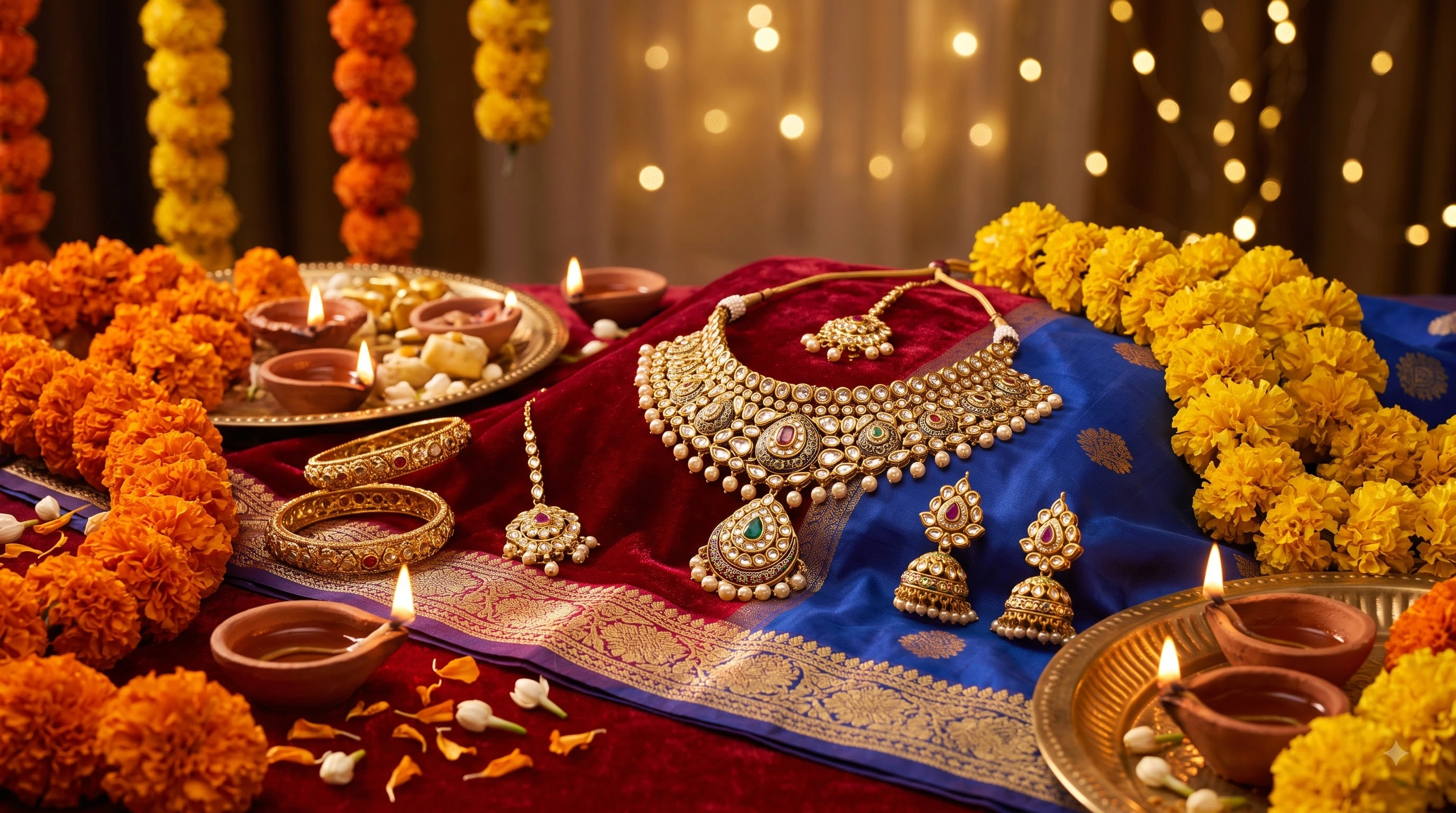
Seasonal product photography adapts the visual environment to a festival, holiday, or time of year.
It helps brands connect products with relevant shopping occasions and promotional campaigns.
Best for: Jewellery, gifts, fashion, home decor, sweets, cosmetics, and seasonal collections.
Example: Traditional jewellery arranged with marigold flowers, rich fabric, and warm festive lighting for a Diwali campaign.
Photography tip: Keep the product at the center of the composition and use culturally appropriate props.
21. Group Product Photography
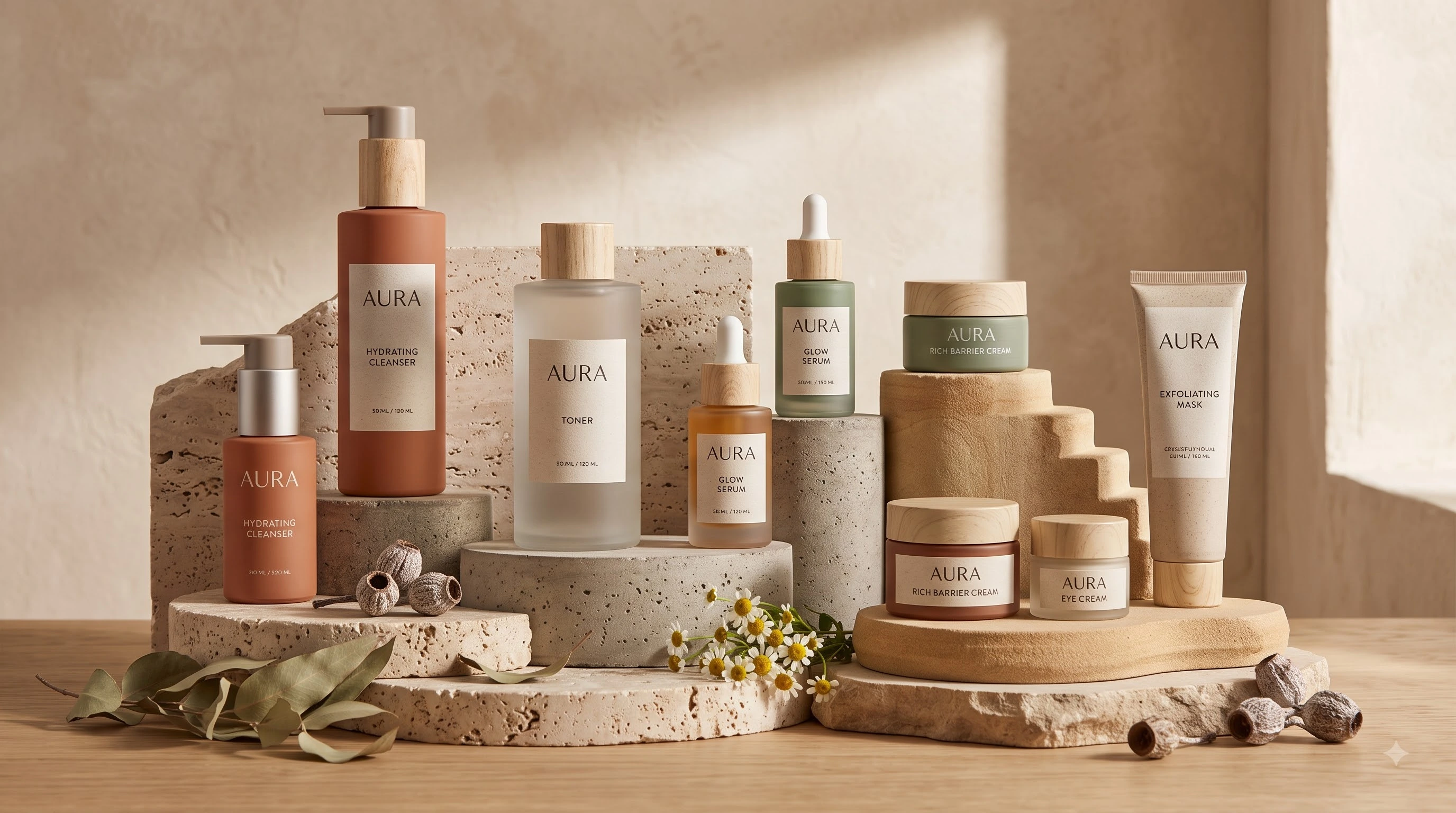
Group photography presents several products together to showcase a collection, range, bundle, or set.
It helps customers compare packaging, colors, sizes, or related items.
Best for: Skincare collections, cosmetics, food products, stationery, and gift sets.
Example: A complete skincare range arranged across different platform heights.
Photography tip: Create a clear hierarchy so the products remain easy to distinguish.
22. Scale and Comparison Product Photography
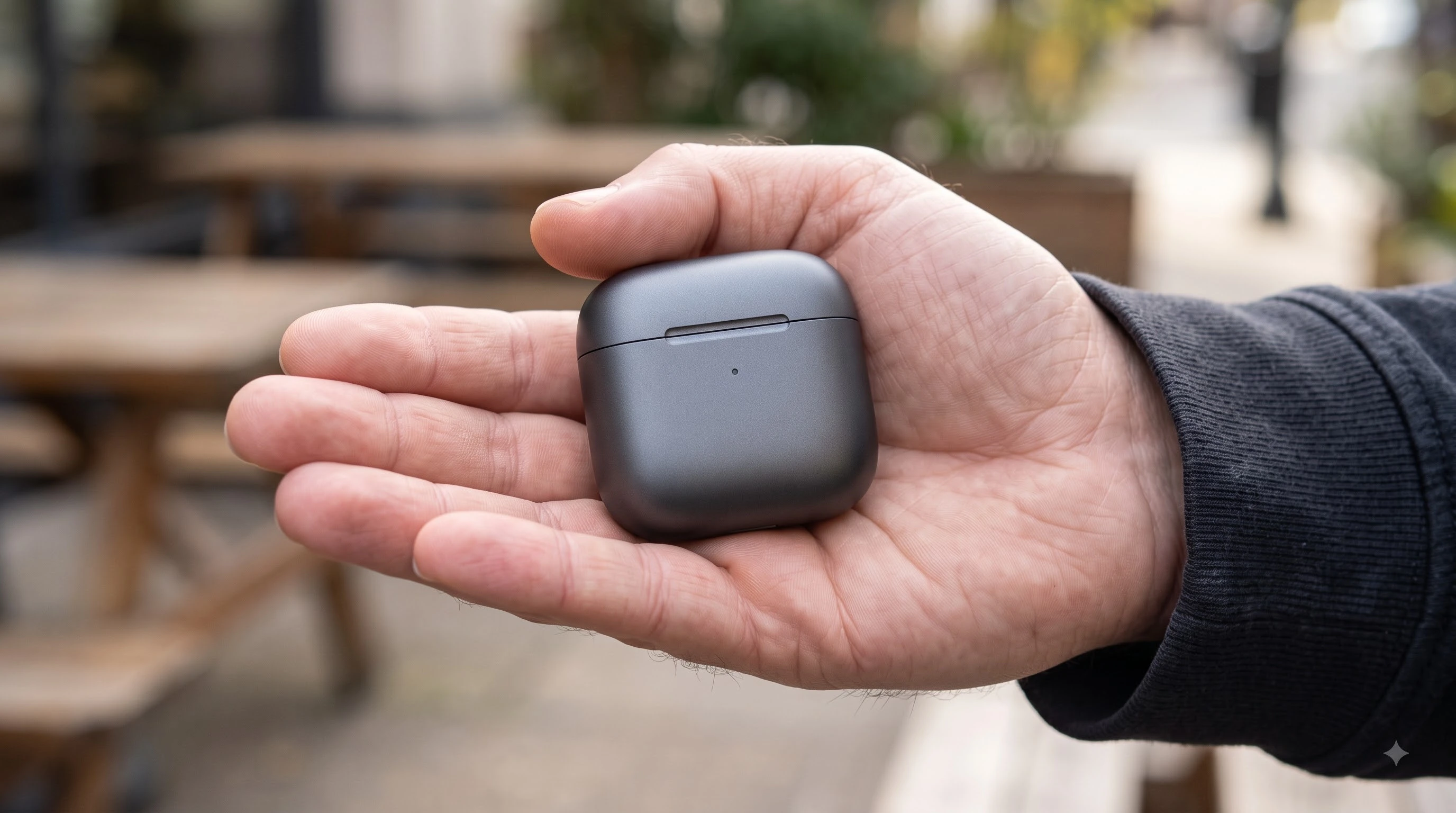
Scale photography shows how large or small a product is relative to a familiar object, hand, or person.
It is particularly useful when product dimensions are difficult to judge from isolated photographs.
Best for: Jewellery, electronics, furniture, handbags, home accessories, and small gadgets.
Example: A wireless earbud case photographed in a person's hand to communicate its compact size.
Photography tip: Use accurate proportions and avoid perspective distortion that makes the product appear larger or smaller than it is.
23. 360-Degree Product Photography
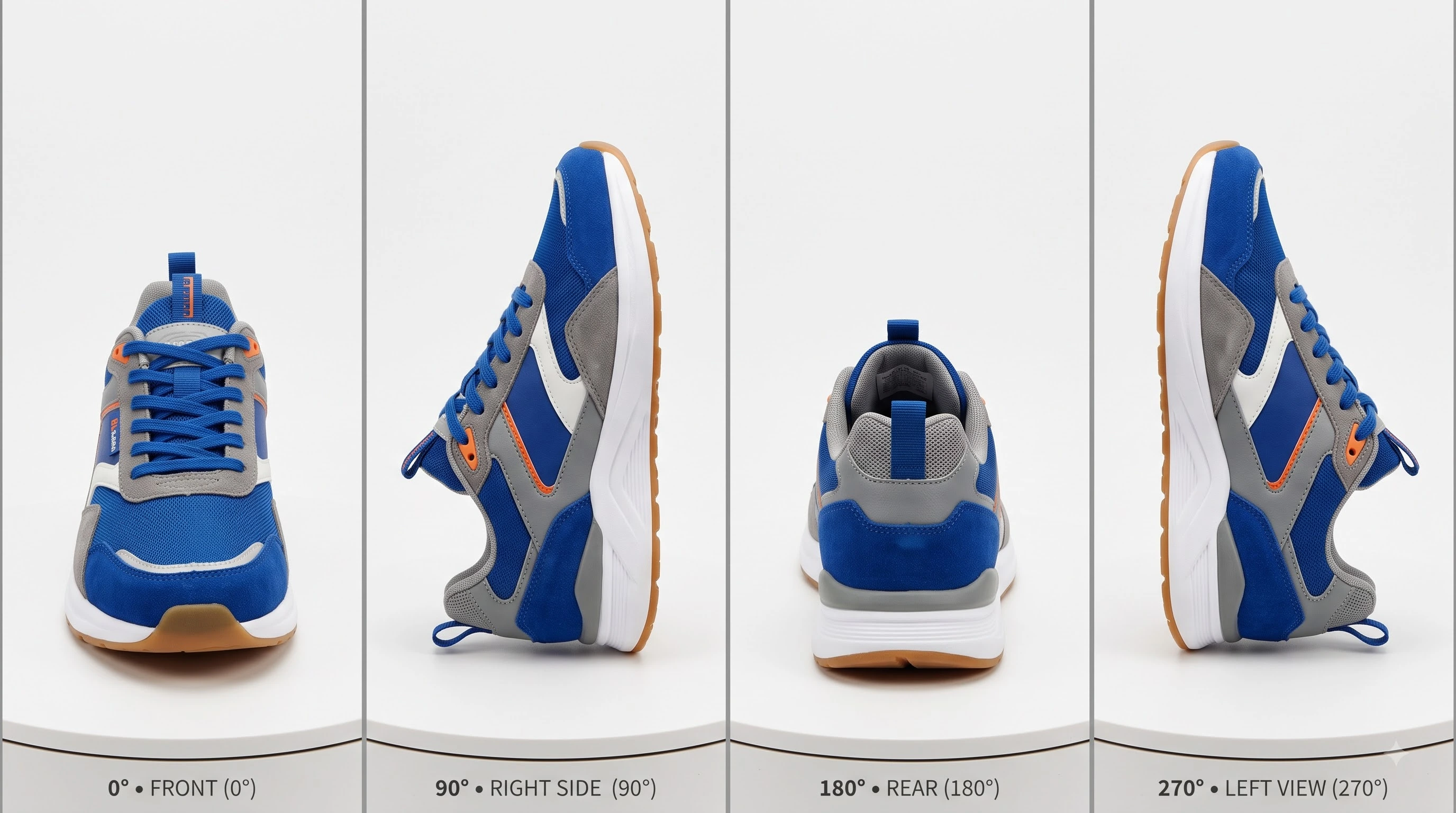
360-degree product photography captures an item from multiple angles so viewers can examine its overall form.
It is typically presented as an interactive rotation sequence rather than a single still photograph.
Best for: Footwear, electronics, furniture, handbags, and products where multiple viewing angles are important.
Example: A sneaker photographed at regular rotational intervals to create an interactive product view.
Photography tip: Keep the camera, lighting, product position, and rotation increments consistent across frames.
24. Hero Product Photography
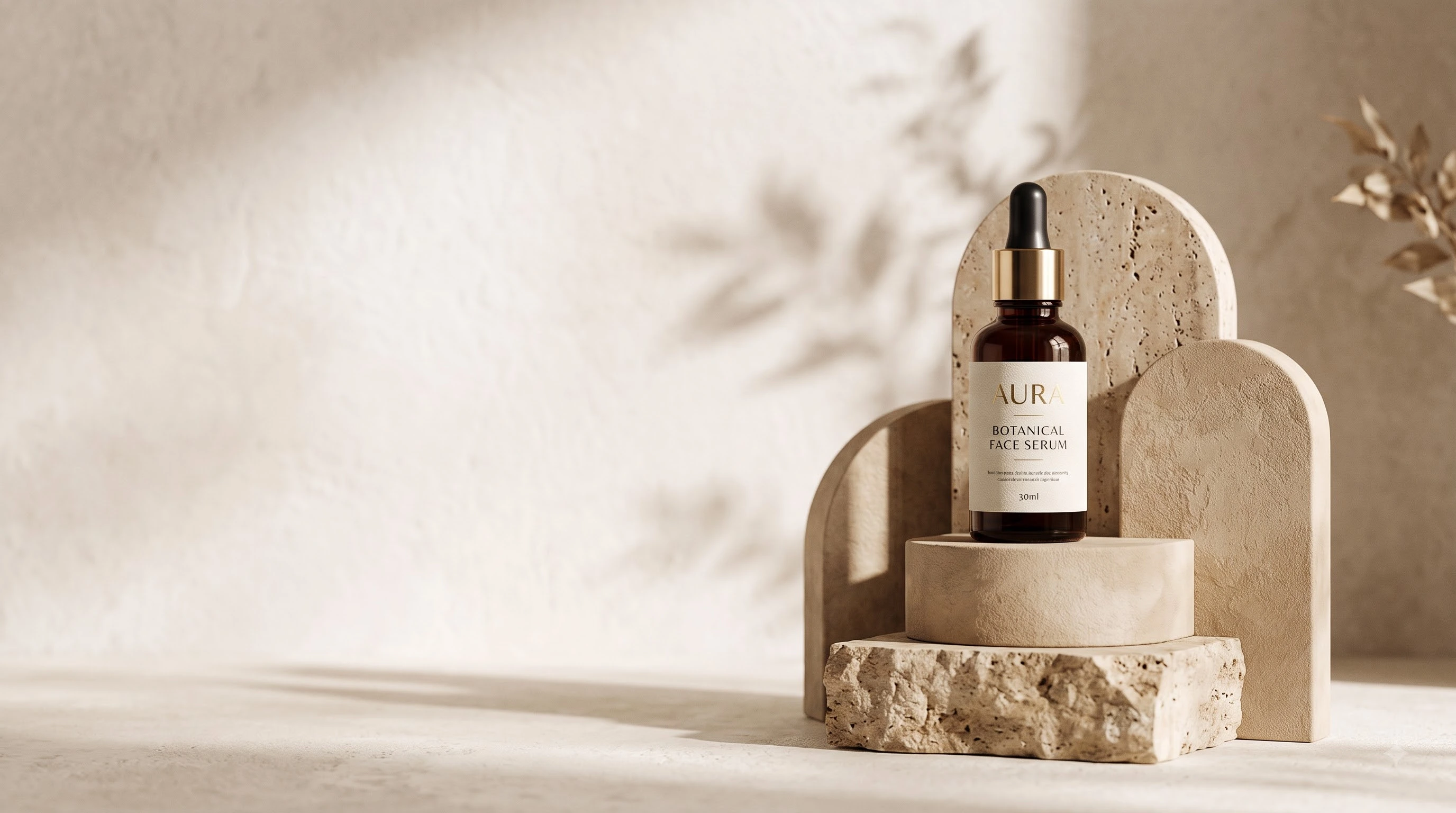
Hero photography makes one product the unmistakable focal point of a composition.
A hero image can be minimalist, luxury, colorful, dramatic, or lifestyle-oriented. The defining characteristic is its strong visual hierarchy.
Hero shots often leave negative space for a headline, promotional message, or website call to action.
Best for: Website banners, product launches, paid advertising, and campaign landing pages.
Example: A premium serum bottle on a sculptural pedestal, with soft dramatic lighting and open space beside the product for campaign copy.
Photography tip: Design the composition around its intended placement, including whether text will be added later.
Product Photography Styles Comparison
Not every photography style works equally well for every marketing objective. The following list provides a practical starting point.
- White background: Best for ecommerce listings and product catalogs.
- Minimalist: Best for modern brands, skincare, electronics, and accessories.
- Lifestyle: Best for real-world product context, furniture, fashion, and personal care.
- Studio: Best for controlled commercial photography of cosmetics, watches, and packaged goods.
- Flat lay: Best for product collections, social content, beauty, food, and stationery.
- Luxury: Best for premium campaigns featuring jewellery, fragrance, and watches.
- Editorial: Best for brand storytelling, fashion, accessories, and fragrances.
- Macro: Best for detailed product images showing materials, craftsmanship, and textures.
- Conceptual: Best for creative advertising, product launches, and promotional campaigns.
- Outdoor: Best for nature-inspired products, footwear, skincare, and sports equipment.
- Food and beverage: Best for showcasing freshness, ingredients, and appetite appeal.
- Model: Best for fashion, beauty, jewellery, and products requiring human context.
- Dark and moody: Best for cinematic campaigns featuring fragrance, watches, and leather goods.
- Colorful: Best for playful campaigns featuring makeup, candy, and toys.
- Monochromatic: Best for cohesive visual branding and color-focused campaigns.
- Splash: Best for beverages, skincare, and personal care products.
- Levitation: Best for dynamic campaigns featuring footwear, gadgets, and cosmetics.
- Seasonal: Best for festival promotions, gifting campaigns, jewellery, and home decor.
- Group: Best for showcasing product collections, bundles, and complete ranges.
- Scale: Best for communicating product dimensions and relative size.
- 360-degree: Best for interactive product exploration.
- Hero: Best for website banners, product launches, and advertising campaigns.
How to Choose the Right Product Photography Style
The best product photography style is not necessarily the most visually elaborate. It is the one that communicates the right information to the right audience.
1. Start With the Purpose of the Image
Before choosing a background or lighting setup, decide where the image will appear.
A product listing usually needs clarity and accuracy. A social media campaign may benefit from a distinctive visual concept. A website hero image may need strong composition and room for marketing copy.
The same product can require several different images to support these objectives.
2. Understand Your Brand Identity
A premium fragrance brand might use refined lighting, elegant materials, and restrained colors. A playful candy brand might prefer bold colors, energetic compositions, and imaginative props.
Neither approach is universally better. The visual direction should support the brand's personality and customer expectations.
3. Consider the Product's Characteristics
Different materials respond differently to lighting.
Reflective jewellery requires careful highlight control. Transparent glass needs deliberate edge lighting. Fabric photography should communicate texture and fit, while food photography often benefits from lighting that reveals surface details.
The product itself should influence the creative decisions.
4. Build a Complete Image Collection
Instead of relying on one photograph, plan a small set of complementary visuals.
For example, a skincare brand could use a white-background image for its catalog, a macro image to show texture, a lifestyle photograph for context, and a luxury hero image for a campaign.
Each photograph answers a different customer question.
How to Create Different Product Photography Styles Using AI
AI image generators offer another way to explore product photography concepts without physically constructing every scene.
With a suitable reference image and a detailed prompt, creators can experiment with studio environments, lifestyle settings, lighting approaches, and advertising compositions.
However, AI-generated visuals are not automatically accurate representations of real products. They require careful review, especially when used in commercial advertising.
Step 1: Prepare Your Product Image
Start with a clear photograph of the actual product.
The reference should show its shape, colors, packaging, logo, and important design details as accurately as possible.
Step 2: Choose a Photography Style
Select the creative direction according to the image's purpose.
For example, a skincare product could be presented through minimalist studio photography, botanical lifestyle photography, luxury editorial photography, or splash photography.
Step 3: Write a Structured Photography Prompt
A useful prompt should describe the product, background, props, lighting, composition, camera perspective, and intended visual result.
Here is an original example:
Create a premium commercial product photograph using the uploaded product image as the main reference. Analyze its shape, colors, materials, packaging, and visual identity. Place the product in a minimalist studio environment with an elegant geometric pedestal, a complementary background, soft directional lighting, realistic shadows, and controlled reflections. Keep the product as the central subject. Preserve its original shape, proportions, label, logo, typography, and packaging colors as accurately as possible. Use a refined editorial composition with realistic material textures and professional commercial photography aesthetics.
This example uses an adaptive approach: rather than assigning every product the same colors and props, it instructs the AI to consider the product's visual characteristics.
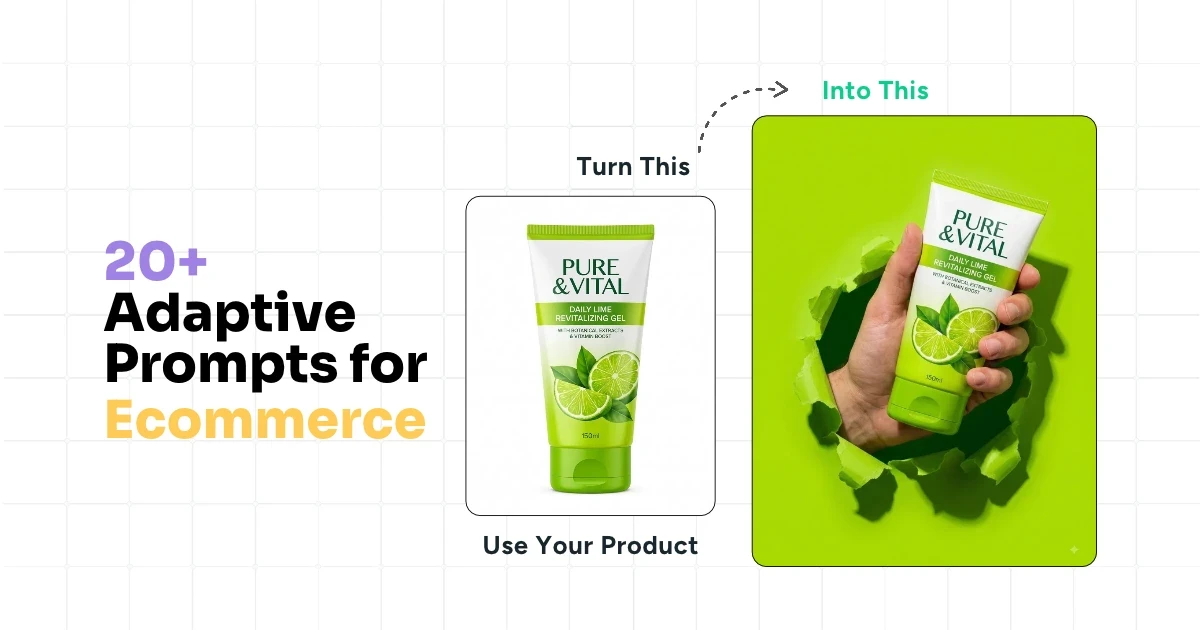
You can explore the 20+ Adaptive Prompts for Ecommerce Brand : https://www.imaginebuddy.com/blog/ai-product-photography-prompts-ecommerce
Step 4: Generate and Review
Upload the product reference and use the prompt in a compatible AI image generator, such as ChatGPT or Gemini.
After generating an image, compare it carefully with the original product.
Check the packaging, text, colors, shape, proportions, and any features that could affect customer expectations.
Step 5: Explore Additional Styles
Once you have a satisfactory result, try another visual direction.
A single product reference can become the starting point for multiple creative concepts, such as a clean catalog shot, an editorial campaign image, a lifestyle scene, and a seasonal promotional visual.
Using Adaptive AI Product Photography Prompts
Writing a detailed photography prompt for every product can be time-consuming.
ImagineBuddy provides adaptive AI product photography prompts designed to guide image generators in adjusting styling, backgrounds, lighting, props, and composition according to the uploaded product.
The platform includes prompt concepts for categories such as beauty, fashion, jewellery, electronics, and accessories.
Rather than treating every product as visually identical, this approach uses the product's characteristics as part of the creative brief.
You can explore the ImagineBuddy Adaptive AI product photography prompt library at https://www.imaginebuddy.com/ for different visual concepts.
Common Product Photography Mistakes to Avoid
Choosing Aesthetics Over Clarity
An elaborate background may look attractive but make the product difficult to identify. The product should remain visually prominent, particularly in ecommerce images.
Using Too Many Props
Props should add context, not compete for attention. Remove objects that do not contribute to the intended message.
Ignoring Lighting and Material Behavior
Reflective packaging, transparent bottles, polished metal, and textured fabric each require different lighting decisions.
Poorly controlled reflections or unnatural shadows can make even expensive products look unconvincing.
Using Inconsistent Photography Across a Collection
A catalog containing unrelated lighting styles, background colors, and camera angles can feel visually disorganized.
Create a consistent photography system while allowing room for campaign-specific variations.
Publishing AI-Generated Images Without Verification
AI tools may alter logos, invent product details, distort packaging, or produce inaccurate colors.
Review every image against the real product, and follow applicable marketplace, advertising, and AI-disclosure requirements.
Conclusion
Understanding the different types of product photography helps brands make more intentional visual decisions.
White-background photography can communicate product details clearly. Lifestyle photography adds context. Macro images reveal craftsmanship. Luxury and editorial styles create distinctive brand experiences, while conceptual photography offers room for creative experimentation.
There is no single style that works for every product or marketing channel.
The strongest product photography strategy combines visual appeal with accurate product presentation and a clear commercial purpose.
For brands exploring AI-assisted creative production, adaptive prompts provide a practical starting point for experimenting with different photography styles while keeping the actual product at the center of the concept.
Explore ImagineBuddy adaptive AI product photography prompts at https://www.imaginebuddy.com/ to discover creative directions for your next product campaign.